Frequently Asked Questions
What are the zoning regulations for building a barndominium?
Zoning rules for barndominiums change from county to county and can affect what you can build and where. Typical restrictions cover land use, building height, setbacks, and sometimes exterior appearance. Before you plan, check with your local planning or zoning office so you know what’s allowed on your lot. If your property lies in a residential district, there may be specific limits on metal buildings. Working with a local builder who knows regional codes can smooth the process and help you stay compliant.
Can barndominiums be financed like traditional homes?
Yes — many barndominiums qualify for the same financing routes as conventional homes, but lenders often need more documentation because of the nonstandard structure. Expect requests for detailed plans, a line-item budget, and a finished-scope description so appraisers can value the property. Construction-to-permanent loans are common: they fund the build, then convert to a mortgage when the home is complete. It’s wise to talk with local lenders who have experience with metal buildings to see which products fit your project.
What are the insurance considerations for barndominiums?
Insurance for barndominiums can look different than for stick-built homes. Policies should cover the residential portion and any commercial-type uses—workshops, storage, or equipment—if those are present. Insurers consider materials, location, and intended use when setting rates. Talk to an agent who’s familiar with barndominiums to make sure your policy covers fire, theft, storm damage, and any specialty exposures tied to shop areas.
How do I choose the right contractor for my barndominium project?
Pick a contractor with proven experience on metal buildings and barndominium projects. Check references, review past jobs, and ask to see finished homes they’ve completed. Interview several builders to compare timelines, budgets, and communication styles. Verify licensing and insurance, and request a detailed written estimate so you can compare apples to apples before signing a contract.
What maintenance is unique to barndominiums compared to traditional homes?
Barndominiums need attention to their metal envelope. Regularly inspect the roof and panel fasteners to prevent leaks, and reseal flashing and penetrations every few years. Metal exteriors resist some types of wear but can corrode if coatings fail, so touch-ups and coating maintenance matter. Inside, controlling moisture and condensation is important—proper insulation and ventilation will prevent problems. A seasonal maintenance checklist helps extend the life of the shell and systems.
Are there any design limitations when building a barndominium?
Barndominiums are flexible, but local codes and zoning can place limits on size, height, or appearance—especially in residential neighborhoods. Structural needs also depend on intended use: a large workshop requires different planning than purely living space. Working with an architect or designer experienced in barndominiums helps you meet code and create a functional, attractive layout that fits local rules.
What Is a Barndominium and How Does It Compare to Traditional Homes?
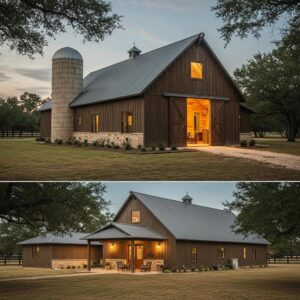
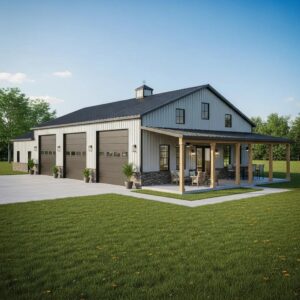
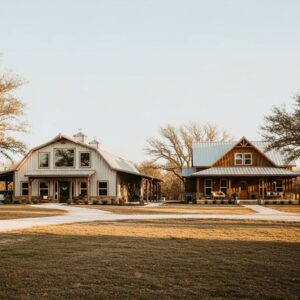
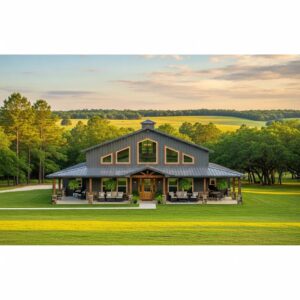
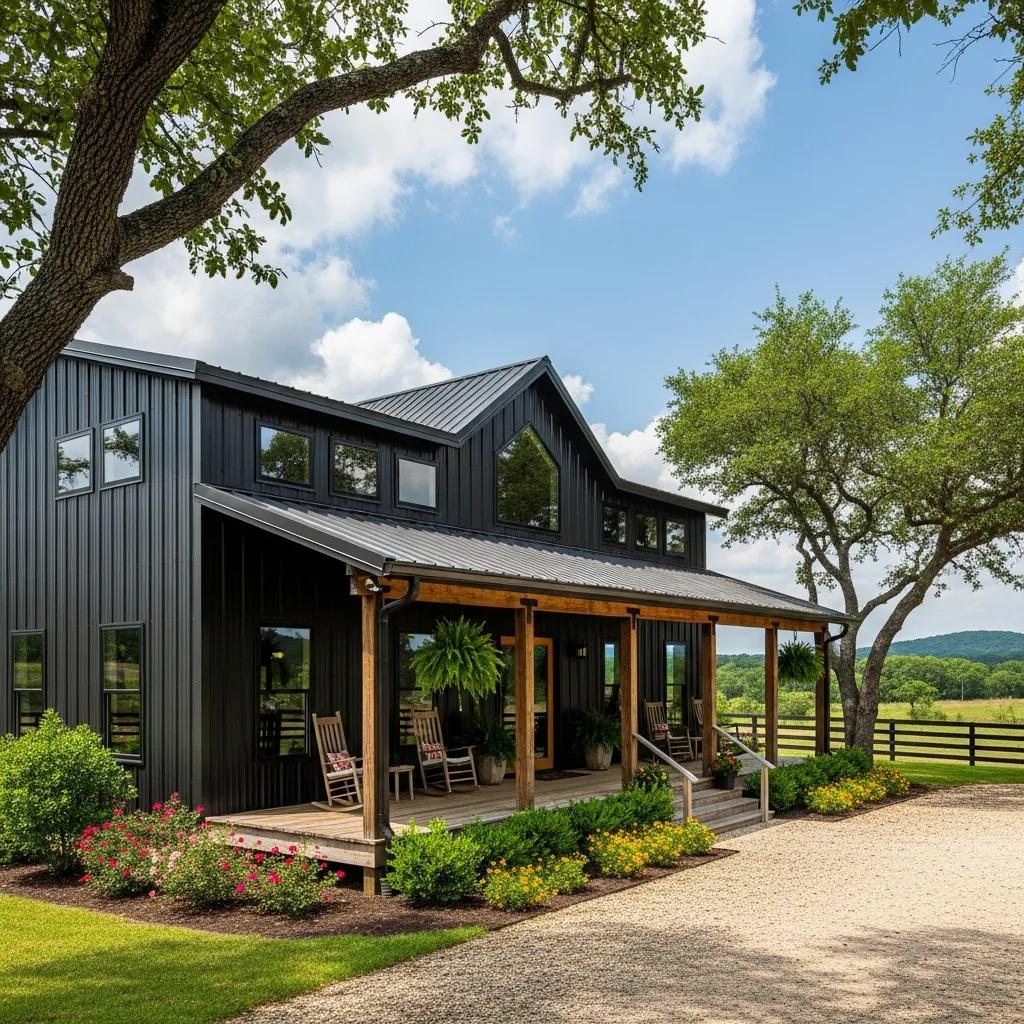
A barndominium is a home built from a metal or post-frame shell—commonly a steel-frame or pole-barn style—finished inside to create comfortable living areas alongside open shop or storage spaces. The main appeal is the shell-to-finish workflow: erect a durable metal envelope, insulate and finish the interior, then install the mechanical systems. That approach cuts framing complexity and can lower labor costs. The real benefit is versatility: you can combine living space with a workshop, storage, or hobby area and often finish faster than a comparable stick-built custom home. This basic definition highlights the structural and lifestyle trade-offs to consider.
Compared to traditional stick-built homes, barndominiums differ in frame type, finish options, and common uses. Knowing these differences will help you choose the best approach for your lot and budget. Below are quick comparison points on cost, build time, maintenance, and flexibility.
Barndominium vs. Traditional Homes — quick comparison:
- Structure and materials: Barndominiums usually use steel or post-frame systems; traditional homes use wood framing and more complex load-bearing assemblies.
- Build time: Erecting a metal shell and enclosing it often shortens the structural phase versus full stick framing.
- Maintenance: Metal siding and roofing lower some upkeep but require attention to fasteners and moisture control.
- Versatility: Barndominiums commonly integrate large shop spaces and open plans that suit hobbyists and multigenerational living.
These points clarify the trade-offs between a metal-building home and a conventional residence and lead into the next section on defining features and interior considerations.
What Defines a Barndominium and Its Key Features?
A barndominium is defined by a durable exterior shell—typically steel frame or post-frame construction—paired with interior finishes that meet residential codes. Key components include a concrete slab foundation, steel framing or pole posts, metal siding, and a roof sized for local wind and snow loads. Interior systems such as spray foam insulation and a properly sized HVAC are essential to make the shell livable. The practical benefit is an open-plan interior that supports vaulted ceilings, lofts, and an integrated shop. This layout works well for families, retirees, and owners who want workspace next to living areas. For example, a 40’×60’ steel-frame shell with a 1,200–1,600 sq ft finished area and an attached 800 sq ft shop balances living comfort and hobby space while keeping structural simplicity. These features set expectations for finishes, mechanicals, and long-term upkeep before we discuss cost.
What Are the Pros and Cons of Living in a Barndominium?
Barndominiums bring clear advantages: lower initial framing costs, durable metal exteriors, flexible floor plans, and easy integration of workshop or RV storage. They’re cost-effective for owners who want multi-function spaces and are popular in regions like East Texas and Louisiana where open-plan living and storm-resilient shells are valued. Challenges include appraisal and resale nuances—some lenders and appraisers handle metal-building homes differently—and the need for careful insulation and moisture control to maintain comfort. Routine maintenance such as checking roof fasteners, flashing, and protective coatings is important. Knowing these pros and cons helps you decide whether a barndominium fits your lifestyle; next we’ll translate those considerations into budget numbers.
How Much Does a Barndominium Cost per Sq Ft in East Texas & Louisiana?
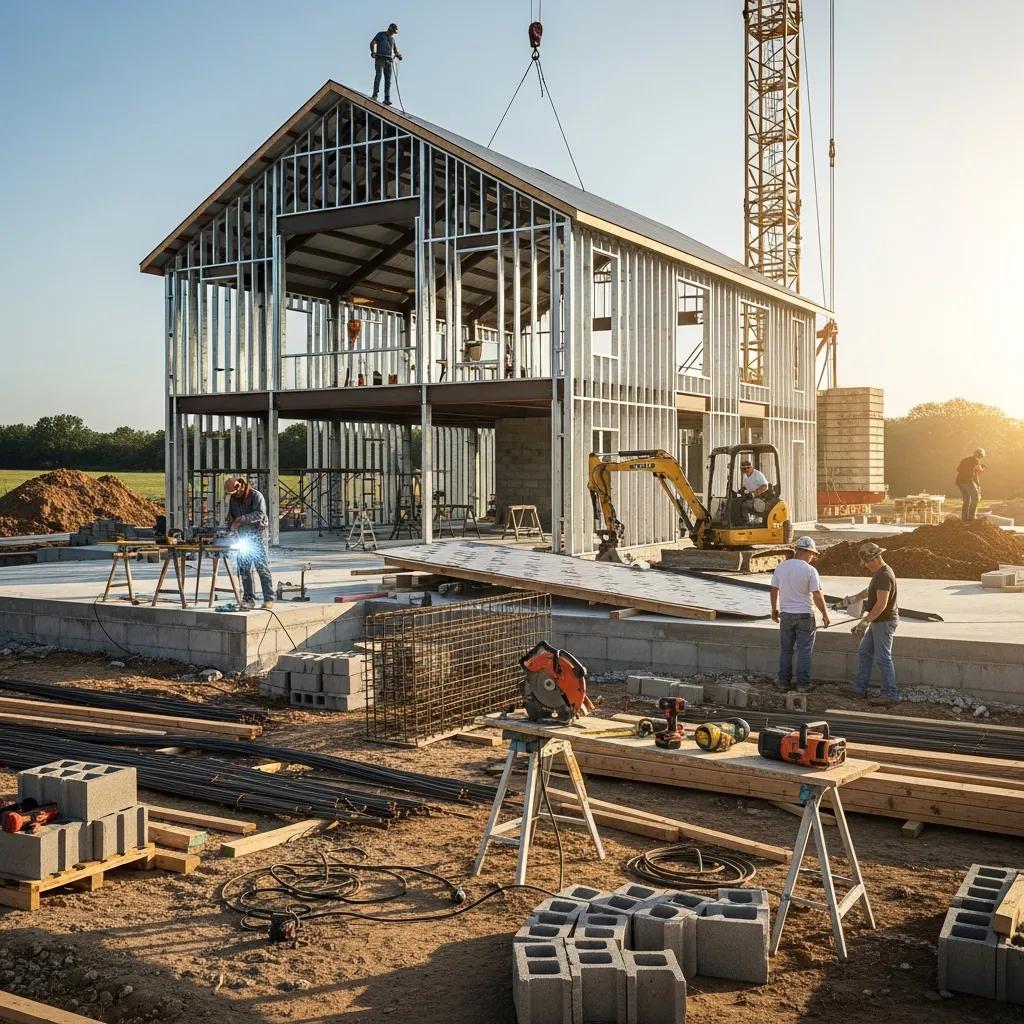
In East Texas and Louisiana, finished barndominiums range from modest per-square-foot budgets for basic finishes to much higher costs for turnkey custom interiors. Shell-only options cost significantly less up front. The reason for this range is that structural shell costs (steel frame, slab, envelope) are separate from interior finishes, mechanical systems, and site-specific foundation work. The advantage to buyers is a tiered budgeting approach: knowing the shell-only baseline makes it easier to plan for finishes and systems that match your lifestyle.
| Build Type | Typical Per-Sq-Ft Range | Notes / Typical Additions |
|---|---|---|
| Shell-only barndominium | $40–$80 | Basic steel frame, metal siding, roof; slab included; buyer finishes interior later |
| Standard finished (basic turnkey) | $90–$140 | Includes interior walls, basic finishes, plumbing, electrical, HVAC installed |
| High-end turnkey / custom finishes | $150–$220+ | Upgraded cabinetry, finishes, engineered systems, specialized shop features |
This table shows how finish level drives per-square-foot cost and why shell-only pricing is only part of the total investment. Choosing your build type early clarifies financing needs and helps avoid surprises when bidding finish work.
What Factors Influence Barndominium Pricing?
Several factors drive per-square-foot pricing: overall size and layout complexity, finish level, foundation type, site conditions, local labor and material costs, and mechanical system choices. Larger open-plan shells usually lower structural per-square-foot costs but can increase HVAC and finishing expenses if they require complex zoning. Site prep and soil conditions directly affect foundation costs—poor soils or steep grading add expense—so local examples include lots near Toledo Bend or uneven parcels around Sam Rayburn that need extra grading or drainage work. Upgraded finishes such as hardwood floors, custom cabinetry, or high-performance windows move a build from standard to high-end. Understanding these drivers helps you prioritize budget items and decide between shell-only and turnkey approaches.
- Size and layout complexity: More rooms and partitions increase finish labor and materials.
- Finish level: Premium fixtures and custom cabinetry raise per-square-foot costs quickly.
- Site and foundation: Soil, drainage, and access can add thousands to initial budgets.
These factors set the stage for comparing shell-only and turnkey scopes so owners can estimate the total finish cost after the shell is delivered.
How Do Shell-Only and Turnkey Barndominiums Differ in Cost?
Shell-only delivers the structural envelope—steel frame, metal siding, roof, and often a concrete slab—at a lower upfront price, but finishing the interior requires budgets for framing, insulation, drywall, electrical, plumbing, HVAC, and finishes.
Turnkey pricing covers the full scope of residential finishes and systems, reducing your coordination work but raising the initial contract price.
A simple budgeting rule is to use the shell-only cost as a baseline and add 50–100% of that number to estimate a comfortable turnkey budget, depending on finish level and mechanical choices. For example, a $60/sq ft shell may need another $60–$120/sq ft to reach a fully finished standard or upgraded interior.
| Scope | Included Items | Typical Additional Cost After Shell |
|---|---|---|
| Shell-only | Steel frame, roof, siding, slab | Finish build-out: framing, insulation, finishes, MEP |
| Turnkey (standard) | Full finishes, systems installed | Minimal; includes punch list and warranty items |
| Turnkey (custom) | High-end finishes, integrated shop systems | Higher allowances for specialty equipment |
In short: shell-only lowers the initial price but requires disciplined budgeting and contractor coordination to keep finish costs from growing. Many homeowners request personalized quotes to align scope with budget.
Ross Homes & Drafting, LLC provides personalized estimates and 3D drafting to compare shell-only and turnkey options in East Texas and Louisiana. For a tailored cost breakdown or a quote, contact Travis Ross at travis@rossdrafting.com or 936.671.0652; regional guidance helps align your budget with site realities.
How Long Does It Take to Build a Barndominium?
Most barndominium builds complete in roughly 3–6 months, though customization, permitting, and site conditions can extend that timeline. The main reason durations vary is the split between the fast structural phase (metal shell erection) and the longer interior mechanical and finish work. The advantage of the barndominium model is often a shorter structural phase compared with stick framing, which can speed weather-tight milestones and let interior trades work sooner.
- Site preparation and permitting: 2–6 weeks depending on local approvals and grading.
- Foundation and slab: 2–4 weeks, depending on curing and soil conditions.
- Shell erection (frame, roof, siding): 1–3 weeks for steel builds.
- Rough-ins and insulation: 2–6 weeks depending on complexity.
- Interior finishes and commissioning: 4–12 weeks for standard to high-end finishes.
What Is the Typical Construction Timeline for Barndominiums?
Phase-by-phase, expect these windows: site prep and permits (2–6 weeks), foundation and slab (2–4 weeks), shell erection (1–3 weeks), rough-ins and insulation (2–6 weeks), and finishes/commissioning (4–12 weeks). Custom work—built-in cabinetry, specialty shop systems, or complex utilities—lengthens the finish stage. For example, a 2,400 sq ft finished home with an 800 sq ft shop might erect the shell in three weeks but need roughly three more months to complete interiors and balance systems. Understanding these phases helps you set a realistic occupancy target and avoid schedule surprises tied to custom scope items.
How Do Permitting and Site Preparation Affect Build Duration?
Permitting and site work are often the most unpredictable schedule items. Local review cycles, environmental or septic approvals, and site access can delay permits. Even with a fast crew, permit holds or unexpected soil remediation stop progress. In East Texas and Louisiana, floodplain reviews, septic permitting near Toledo Bend, and utility access around Sam Rayburn are common time drivers. To reduce risk, engage planning departments early, run pre-application soil tests, and work with a builder familiar with regional permitting. Proactive site work and permit planning shorten overall duration and reduce costly schedule stalls.
| Project Phase | Typical Duration | Dependencies / Risks |
|---|---|---|
| Permits & approvals | 2–8 weeks | Local review cycles, specialized permits |
| Site prep & grading | 1–4 weeks | Soil conditions, access, weather delays |
| Foundation & slab | 2–4 weeks | Soil remediation, curing time |
| Shell erection | 1–3 weeks | Material lead times, crane availability |
| Finishes & commissioning | 4–12 weeks | Custom selections, subcontractor scheduling |
This timeline highlights dependencies owners should address early to help keep projects near the 3–6 month target on typical builds.
Are Barndominiums Energy Efficient and What Materials Enhance Efficiency?
Yes—barndominiums can be very energy efficient when designed with airtight envelopes, high-performance insulation, correct window selection, and properly sized HVAC systems. Without those elements, metal shells risk thermal bridging and comfort issues. The key is combining air sealing with high R-value insulation and right-sized mechanicals. The payoff is lower operating costs and better comfort when spray foam or insulated panels pair with efficient HVAC strategies and a renewable-ready electrical layout.
Research on post-frame buildings underlines the value of environmental monitoring to understand moisture and temperature behavior and to optimize energy performance.
Post-Frame Building Environmental Monitoring for Energy Performance
A post-frame building on the University of Manitoba campus (107 ft × 40 ft, 18 ft high) was instrumented to monitor environmental loads in real time. The study tracks moisture movement and temperature at more than 150 locations in wall and attic spaces, and monitors load-paths through bracing and posts to the foundation. Soil temperature gradients were recorded at multiple post locations, and the ridge was aligned east–west to study solar effects. Half the interior is dedicated to testing alternative building systems, supporting research into post-frame performance.
Design and Instrumentation of a Post-Frame–Strawbale Infill Building, 2004
| Material / System | Energy Benefit | Estimated Impact / Considerations |
|---|---|---|
| Closed-cell spray foam | High air-seal + insulation | Excellent R-value; controls air leakage; higher up-front cost |
| Open-cell spray foam | Good air-seal + insulation | Lower density; good for interior sound control; less moisture resistance |
| Fiberglass batts | Moderate insulation | Lower cost; requires perfect framing and air barrier to be effective |
| Energy-efficient windows | Reduce heat transfer | Low-E glass and proper framing reduce HVAC load |
| High-efficiency HVAC / mini-splits | Right-sized heating/cooling | Zoning options, better for open-plan volumes |
| Solar-ready roof / renewables | Reduce grid energy use | Adds resiliency and operating cost reduction over time |
How Does Spray Foam Insulation and HVAC Systems Improve Energy Efficiency?
Spray foam—closed-cell or open-cell—boosts efficiency by creating a continuous air barrier and offering high R-value per inch, which reduces infiltration and thermal bridging in metal buildings. Spray foam seals gaps around penetrations and framing members, which is critical in steel-frame envelopes where air leakage and condensation are primary concerns. A correctly sized HVAC system—mini-splits or a right-sized central unit with sealed ducting—works with insulation to avoid short cycling and improve comfort. In many cases the ROI for spray foam shows up in lower energy bills and better occupant comfort within 3–7 years, depending on energy prices and usage.
What Are the Latest Energy-Efficient Design Trends for Barndominiums in 2025?
In 2025, trends emphasize integrated renewables, airtight high-performance envelopes, and smart HVAC controls for measurable savings and resilience. Builders increasingly spec solar-ready roofs, battery-ready electrical layouts, and efficient mini-split systems where appropriate. Passive moves—orientation for cross-ventilation, targeted shading, and daylighting—combined with durable coatings and condensation control further improve performance. These choices balance upfront cost with lifecycle savings and appeal to buyers seeking efficient, resilient homes.
2025 design trend highlights:
- Solar-ready roofs and renewable integration: Prepared electrical layouts simplify future installation.
- High-performance envelope + spray foam: Reduces thermal bridging and improves HVAC performance.
- Smart HVAC zoning and mini-splits: Deliver right-sized comfort for open-plan and shop areas.
These trends inform finish and systems choices to maximize efficiency and long-term value, which brings us to financing considerations for energy upgrades.
What Financing Options Are Available for Building a Barndominium?
Common financing paths include construction loans, conventional mortgages after completion, and alternatives like renovation loans or personal financing when lenders treat barndominiums differently. Lenders focus on appraisal and collateral treatment; they want a clear scope, budget, and valuation method because nonstandard homes can face appraisal challenges. Understanding financing early helps you assemble the documentation lenders expect and improves the chance of standard loan approval.
Lenders’ cautious stance toward unconventional builds reflects their risk-averse underwriting practices.
Lender Risk Aversion in Residential Construction Loans
Lenders tend to be conservative when underwriting residential construction because perceived risk drives tighter review. That caution can make banks less willing to finance unconventional projects without strong documentation and clear valuation.
Fundamentals of residential construction, AC Schreyer, 2017
- Construction-to-permanent loans: Fund the build and convert to a mortgage at completion; require detailed budgets and draw schedules.
- Conventional mortgage after completion: Possible if the finished home appraises to local comparables; requires final inspections and occupancy sign-off.
- Alternatives: Personal loans, home equity, or specialized renovation products if standard construction loans aren’t available.
These options show why lender familiarity and a clear finished-scope plan matter for financing in East Texas and Louisiana.
Can You Obtain Loans Specifically for Barndominium Construction?
Yes. Many lenders will approve construction loans for barndominiums when you provide formal plans, a detailed budget, and a finished-scope that supports appraisal value. Lenders need confidence the completed home will appraise to support the loan—using comparable finished examples, professional 3D plans, and builder references strengthens your case. If traditional construction loans aren’t available, consider local lenders or incremental financing options. Talk to a lender early in design to align documentation and avoid surprises.
What Are Common Financing Challenges and Solutions in East Texas and Louisiana?
Local challenges include appraisers unfamiliar with barndominium valuation, lender caution about metal buildings, and sparse comparable sales in rural lake areas. The practical solution is document-heavy: present finished-scope photos, 3D plans, line-item budgets, and references from reputable regional builders to show marketability. Local credit unions and community banks that understand regional building norms often approve loans more smoothly than distant underwriters. Preparing these materials early reduces friction and improves loan outcomes.
Ross Homes & Drafting, LLC helps with plan documentation and references to support financing conversations; contact Travis Ross at travis@rossdrafting.com or 936.671.0652 for assistance with lender requirements and permits in East Texas and Louisiana.
What Are the Essential Planning, Design, and Maintenance Considerations for Barndominiums?
Good planning starts with clear goals: decide whether you want a low-cost shell with phased finishes, a high-end turnkey build, or a mixed-use layout with an attached shop. The key to long-term value is thorough design coordination—detailed 3D drafting, well-defined HVAC zoning, moisture-control strategies, and a site-specific foundation design. Investing time up front reduces change orders, improves energy performance, and strengthens resale appeal. This section offers layout ideas, drafting tips, and a maintenance checklist to protect durability.
How Can You Customize Barndominium Floor Plans and Layouts?
Common layouts include open-concept living centered on a great room, split-bedroom plans for privacy, lofts for extra space, and integrated shop/garage areas adjacent to living quarters. These plans work well in barndominiums because the simple shell allows wide clear spans and flexible partitioning for future reconfiguration. Retirees often prefer single-level split-bedroom plans with a modest shop, while families may choose lofts or second-level living to expand usable square footage. Using 3D drafting clarifies sightlines, mechanical runs, and daylighting, reducing costly on-site changes and ensuring the design meets code and personal needs.
Common layout advantages:
- Open concept: Maximizes flexible living and reduces interior framing.
- Split-bedroom: Adds privacy for multi-generational households.
- Integrated shop: Gives direct access without sacrificing living space.
What Maintenance Is Required to Ensure Barndominium Durability?
Routine maintenance focuses on the building envelope and moisture control: inspect roof and wall fasteners, check flashing and sealants annually, and keep exterior coatings in good condition to prevent corrosion. Durability depends on proactive care of components—fasteners, flashing, gutters, and coated metal—to stop water intrusion, the primary long-term threat to steel structures. Interior tasks include watching for condensation, keeping HVAC systems balanced to control humidity, and servicing mechanical systems yearly. A seasonal checklist—spring and fall roof and sealant checks, biannual HVAC service, and periodic re-coating of exposed metal—helps preserve function and resale value.
| Maintenance Area | Task | Frequency / Outcome |
|---|---|---|
| Roof & fasteners | Inspect and tighten; replace damaged panels | Annually or after storms; prevents leaks |
| Flashing & sealants | Re-seal seams and penetrations | Every 3–5 years or as needed; prevents water intrusion |
| HVAC & insulation | Service systems; check insulation integrity | Biannually; maintains efficiency and comfort |
| Exterior coatings | Touch up coatings and repair corrosion | Every 5–10 years; extends metal life |
This maintenance table outlines proactive actions owners should schedule to protect durability and reduce lifecycle costs.
Ross Homes & Drafting, LLC offers 3D drafting and custom blueprints that help owners plan efficient layouts and maintenance-friendly details. For tailored drafting or design consultation, contact Travis Ross at travis@rossdrafting.com or 936.671.0652 to discuss regional design choices and plan packages that support permitting and long-term upkeep.
Final takeaways: define a clear scope early, plan insulation and HVAC carefully, and schedule routine maintenance to protect your investment.
If you want help turning a floor plan into permit-ready drawings or a personalized cost estimate that reflects East Texas and Louisiana conditions, reach out to Ross Homes & Drafting, LLC. Travis Ross and the team serve as a resource for custom homes, barndominiums, metal buildings, 3D drafting, and whole-home renovations; contact them at travis@rossdrafting.com or 936.671.0652 for quotes, drafting, and permit support.