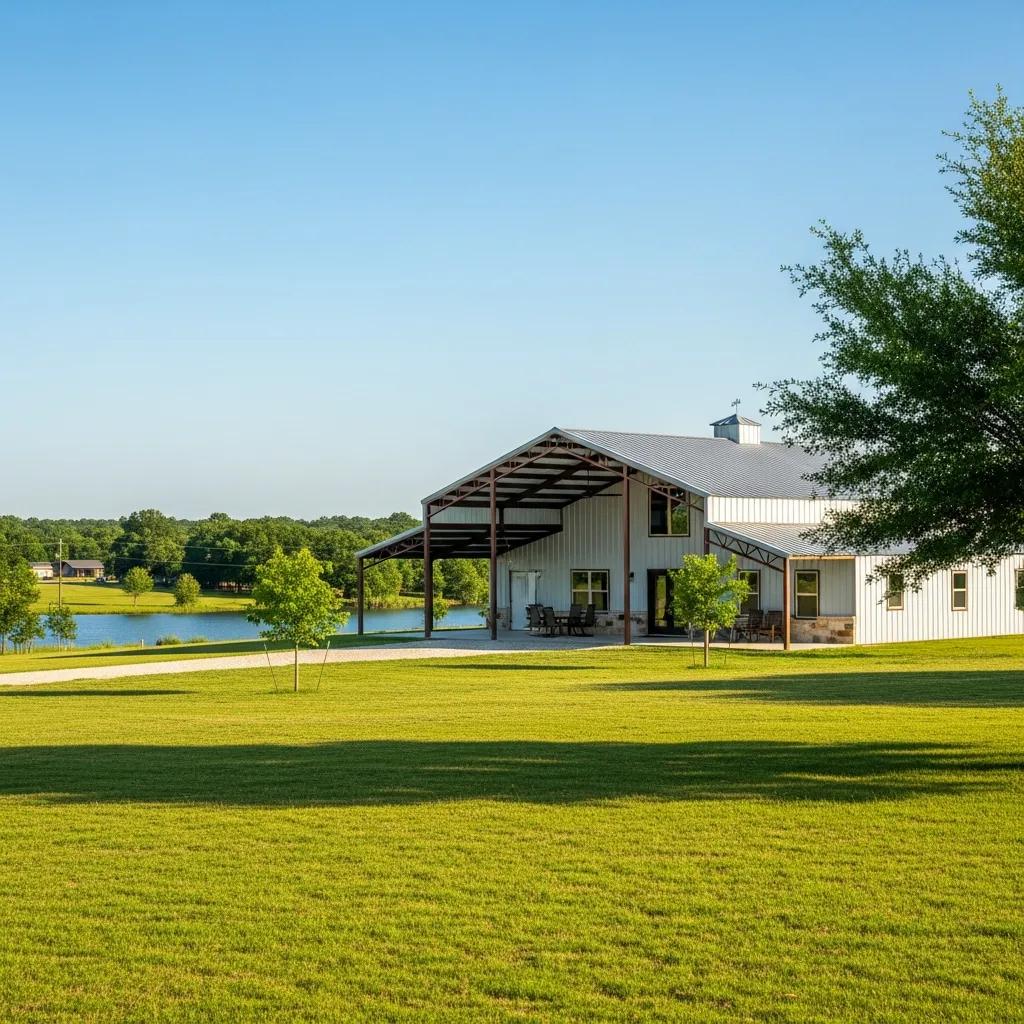
East Texas Metal-Building Homes & Barndominiums: A Homebuyer’s Guide
Metal-building homes and barndominiums pair a steel frame and metal shell with residential finishes to create durable, flexible homes that work well on rural and lakefront lots. This guide walks through what barndominiums are, how steel framing compares to traditional stick-built construction, and why these assemblies suit East Texas conditions—humidity, wind exposure, and lakeside soils. You’ll find realistic 2024–2025 cost ranges, popular floor plans and design trends, energy-saving strategies, and practical financing paths like construction-to-permanent loans. We also outline a clear build process and show how careful 3D drafting and site-aware planning reduce surprises and keep budgets predictable. Finally, we explain how Ross Homes & Drafting, LLC helps local buyers move projects from concept to completion with turnkey services and visualization tools.
Ross Homes & Drafting, LLC serves East Texas and West Louisiana as a local resource for custom homes, barndominiums, metal buildings, and renovations. We lean on generational craftsmanship, straightforward pricing, and 3D drafting so owners can make informed choices about steel-frame construction and lakeside builds. Our regional experience includes site-smart planning for properties around Toledo Bend and Sam Rayburn, plus hands-on help with construction financing. With that local foundation in place, the sections below define the core concepts that drive design, budget, and build decisions for prospective buyers.
What Are Metal-Building Homes and Barndominiums? Definitions and Key Features
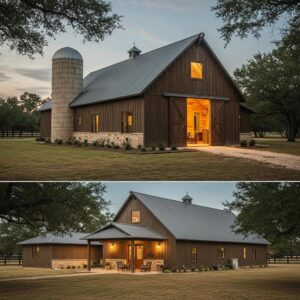
Barndominiums and metal-building homes are residences framed with steel and enclosed with a metal shell, then finished inside to meet code and comfort expectations. Steel framing supports wide clear spans and open floor plans, reducing the need for interior load-bearing walls and making room layouts more flexible—ideal when you want an integrated shop, garage bays, or large living areas. Typical features include metal siding and roofing, insulated envelope systems to manage East Texas humidity, and options that range from simple shells to fully finished turnkey homes. These traits make barndominiums a strong choice for owners who need multi-use space and a faster build timeline than many traditional homes.
Many barndominiums combine rugged exterior materials with familiar residential finishes, which creates both rustic and modern looks while keeping long-term upkeep simple. The next sections compare steel framing with conventional methods and outline regional design choices buyers often pick for East Texas properties.
How Do Steel-Frame Homes Differ from Traditional Construction?
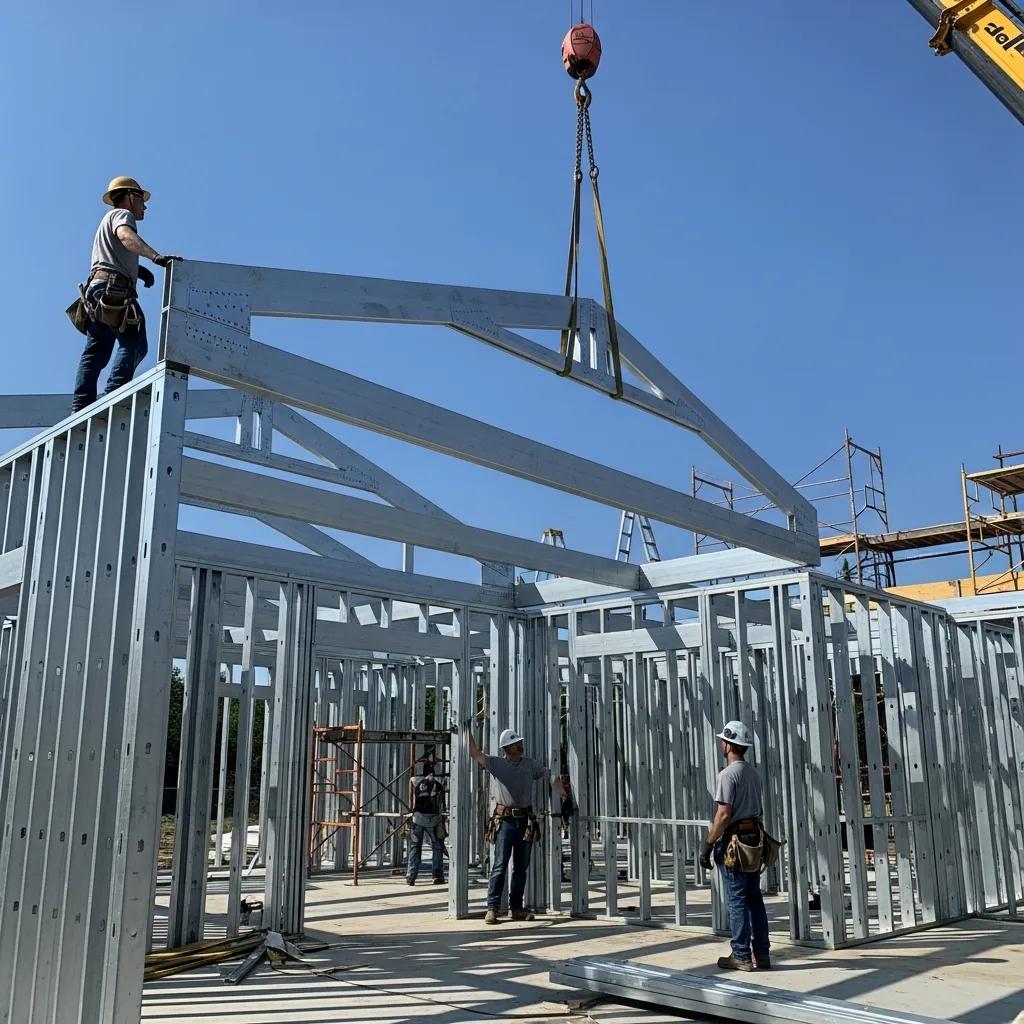
Steel-frame construction differs from stick-built homes mainly in materials, assembly, and maintenance profile. Instead of dimensional lumber, steel homes use cold-formed or welded steel members, which resist rot, termites, and fire and allow longer, uninterrupted interior spans. Because many steel components arrive prefabricated, the framing stage can be quicker and less vulnerable to weather delays than a conventional build.
Research supports the structural performance advantages of cold-formed steel in residential construction.
Cold-Formed Steel Frame Residential Construction
A Test House constructed of high-strength cold-formed steel frame with brick veneer cladding and plasterboard lining was tested under earthquake loads to assess the performance of a
Understanding the benefits of constructing a residential house with a heart of cold-formed steel, VP Paton-Cole, 2017
In East Texas, where humidity and pests can accelerate wood decay, steel framing reduces lifecycle maintenance and improves resilience during wind events common near lakes. Pair steel framing with proper insulation and vapor control and you get a more stable, comfortable interior. From there, buyers usually move into practical aesthetic and functional choices that fit regional needs.
Typical Design Elements of East Texas Barndominiums
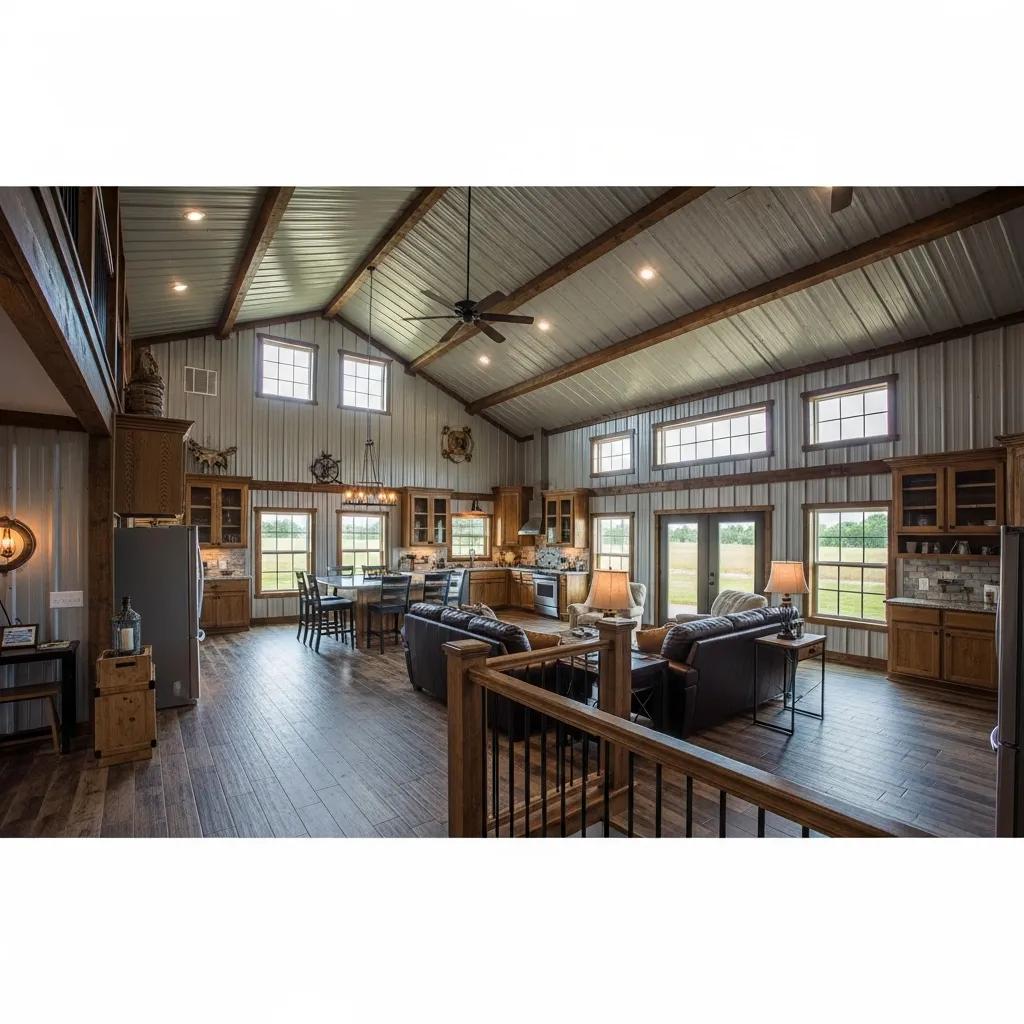
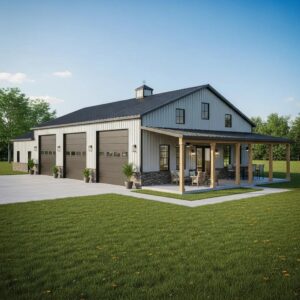
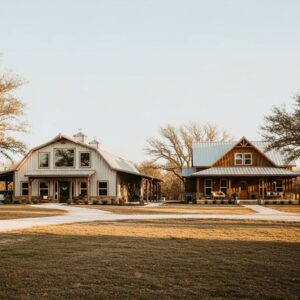
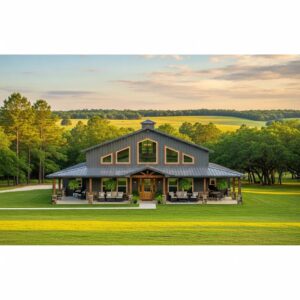
East Texas barndominiums balance durable construction with design touches suited to lake and country living. Common elements include open living areas with vaulted ceilings, integrated workshop or garage bays, covered porches for outdoor living, and durable exterior palettes—dark metals mixed with wood or stone accents. These choices deliver modern comfort with a low-maintenance finish.
Design planning often places large windows on southerly exposures for daylighting, uses modest roof overhangs for rain and sun protection, and relies on raised slabs or engineered footings matched to local soils. Many integrated plans allocate 20–30% of the total square footage to workshop or garage space—an important factor for both function and budget. Those layout preferences help explain why steel-based homes are a good fit for the East Texas climate.
Why Choose Metal-Building Homes and Barndominiums in East Texas? Benefits Explained
Metal-building homes and barndominiums offer durability, predictable costs, energy potential, and design flexibility—qualities that appeal to East Texas homeowners. Steel framing resists rot, pests, and high winds; metal cladding lowers exterior upkeep; and modern insulation strategies can deliver strong thermal performance for our climate. Flexible floor plans let you combine workspace and living areas, often at a shorter timeline and lower framing labor costs than comparable stick-built projects.
Studies highlight how steel frames enable sustainable, affordable, and high-quality housing using rapid construction methods and flexible design.
Steel Frame Residential Construction Benefits: Sustainability & Affordability
This study investigates the potential of steel frame structures for residential construction in Ukraine, focusing on sustainability and rapid building techniques for affordable housing. By tracing steel’s evolution from early projects like the Ditherington Flax Mill and Crystal Palace to modern modular structures such as Pacific Park Brooklyn, the research illustrates how steel frames support cost-efficient, high-quality housing. A novel concept introduced – the metamorphic structure and building envelope – enables flexible design and easy maintenance, tailored to meet Ukrainian context.
PROSPECTS OF IMPLEMENTING STEEL FRAMES IN MULTIFAMILY RESIDENTIAL CONSTRUCTION
To compare structural options for East Texas, the table below highlights common systems and their homeowner benefits.
Different framing approaches offer distinct advantages for weather resilience, maintenance, and design flexibility.
| Structural System | Characteristic | Practical Value |
|---|---|---|
| Steel Frame | Weather and pest resistance | High – resists rot, termites, and wind damage |
| Wood Frame (Stick-Built) | Familiar materials and tradebase | Moderate – easier local sourcing but greater maintenance in humid climates |
| Prefab Metal Shell | Rapid enclosure and predictable costs | High – fast assembly, consistent shell quality |
This comparison explains why many East Texas buyers favor steel-frame or prefab metal-shell approaches for longevity and lower upkeep. The next sections go deeper into durability and energy-efficiency strategies.
How Steel Framing Improves Durability and Weather Resistance
Steel framing reduces vulnerabilities common to wood framing—moisture-driven rot and insect damage among them. Steel members don’t support mold the way wet wood can, and they keep their strength through moisture swings typical in East Texas. Engineered steel framing can also be designed to higher wind ratings, an important advantage for properties near large lakes and open plains.
Practically, improved durability means fewer emergency repairs and lower life-cycle costs—especially when combined with corrosion-resistant cladding and well-detailed water management. Addressing flashings, roof-to-wall transitions, and slab-edge details early in design reduces infiltration risks and protects the home from the elements. That foundation leads naturally into energy-efficiency opportunities for metal homes.
Energy Efficiency Advantages of Barndominiums
Barndominiums can be very energy efficient when the metal shell is paired with high R-value insulation, continuous thermal barriers, and modern glazing and HVAC systems. Properly detailed envelope assemblies prevent thermal bridging and moisture migration, keeping interior temperatures stable and reducing HVAC cycling in humid East Texas weather. Insulation choices include spray foam, insulated metal panels, or cavity insulation like fiberglass—each has trade-offs for cost and vapor control.
Thoughtful building design for hot, humid climates is key to energy efficiency and occupant comfort.
Building Design for Hot & Humid Climates: Energy Efficiency
Places with hot and humid climate throughout the year exist in various parts of the world. The building design requires clear criteria to avoid overcooling and energy wastage, at the same time that guarantee optimal thermal comfort conditions delivered to its occupants. In this scenario, bioclimatic strategies such as the use of natural ventilation and shading, as well as the choice of appropriate construction components, are decisive to reduce the building energy consumption and the heat island effect.
Building design for hot and humid climate in a changing world, MA Triana, 2019
| Component | Attribute | Value |
|---|---|---|
| Insulation Strategy | R-value and continuity | High R-values with continuous barrier reduce thermal bridging |
| Windows | Energy glazing | Low-E windows minimize solar heat gain while preserving daylight |
| HVAC & Solar Readiness | System sizing and orientation | Right-sized equipment and solar-ready roof planes lower operating costs |
When you combine these envelope and system choices, annual energy use can fall below that of poorly insulated conventional homes and deliver more consistent comfort. Next we cover typical project costs and the main factors that drive them.
How Much Does It Cost to Build a Barndominium in East Texas in 2025?
In 2025, barndominium costs in East Texas tend to fall into price bands based on finish level, square footage, and site complexity. Shell-only projects land at the lower end, finished homes sit in the middle, and turnkey luxury builds push costs higher. Key cost drivers include site prep and grading, foundation type, finish quality, mechanical systems, and the size of any integrated shop or garage.
Below is a practical table of per-square-foot ranges across common finish levels to help buyers budget for 2025.
Estimated per-square-foot costs vary by finish level and project scope.
| Build Tier | Pricing Metric | Typical Range (2025 East Texas) |
|---|---|---|
| Shell-Only | $/sqft | $60–$90 |
| Mid-Range Finish | $/sqft | $100–$150 |
| Turnkey Luxury | $/sqft | $160–$220+ |
Moving from a basic shell to a fully finished residence often more than doubles scope-driven costs when you add high-end finishes and systems. The list below breaks down the primary factors that move per-square-foot pricing.
To help readers understand variables, consider the most common cost drivers and how they influence budget and schedule.
- Site Preparation and Access: Lot grading, driveway work, and soil remediation add early costs and influence foundation design.
- Foundation Type: Slab-on-grade is common; deeper footings or piers for unstable soils increase cost.
- Finish Level and Materials: Cabinetry, flooring, and appliances account for much of the variation in per-square-foot pricing.
- Integrated Shop/Garage Size: A dedicated shop increases square footage and can change mechanical and insulation requirements.
Accurate site assessment and early finish selections narrow cost uncertainty and help lenders and builders produce reliable estimates for East Texas barndominiums.
Average Cost Per Square Foot and Influencing Factors
Average cost per square foot depends on whether you build a shell, choose a mid-range finish, or opt for a fully furnished home. In East Texas for 2025, mid-range finished projects most commonly fall between $100 and $150 per square foot. Factors that push costs up include the ratio of conditioned to unconditioned space, adding an integrated workshop, local material and labor availability, and rural permitting or septic needs. Features like vaulted ceilings, premium windows, or custom cabinetry raise the per-square-foot average.
For example, an 1,800 sq ft basic shell with minimal finishes will have a very different budget than an 1,800 sq ft turnkey home with a 1,200 sq ft shop and premium finishes. Planning layout and finish packages early reduces change orders, a frequent source of cost escalation. Those budget dynamics also shape lifecycle cost comparisons with conventional homes.
How Barndominiums Compare Cost-Wise to Traditional Homes
Barndominiums often have lower upfront labor and framing costs than comparable stick-built homes, sometimes saving 10–25% on construction for similar square footage and layout. Savings come from simplified framing, faster shell erection, and fewer interior load-bearing elements. Lower maintenance for metal exteriors and fewer pest-related repairs can also reduce lifecycle costs.
That said, resale perceptions and local comparables affect appraisals. In markets where custom homes and lakefront properties command premiums, a well-detailed barndominium with quality finishes can achieve comparable market value. With cost comparisons clear, buyers can move on to design options that reflect regional preferences and personal priorities.
What Custom Barndominium Designs and Floor Plans Are Popular in East Texas?
Popular plans in East Texas emphasize single-level living, open great rooms, and ample integrated workshop space for hobbyists, small-business owners, and lakefront lifestyles. Typical layouts include three-bedroom ranch plans with attached shops, single-level shells built for future finishing, and hybrid two-story options with living quarters above a ground-level shop. These choices favor accessibility and flexibility while delivering the square footage homeowners want near lakes and rural properties.
Regional style trends mix rustic details—exposed timbers, warm wood accents, barn doors—with modern metal tones and large windows for daylighting. Many clients choose finish packages labeled basic, mid, or premium to control budget and visual impact. Below we outline stylistic features and how to integrate functional shop space into custom plans.
Features That Define Modern and Rustic Barndominium Styles
Modern barndominiums favor clean lines, matte or dark metal exteriors, open interiors, and minimalist trim for a contemporary look. Rustic styles lean on exposed beams, reclaimed wood, sliding barn doors, and warm palettes for a cozy feel. Many successful homes blend them—modern metal shells with selective rustic interior details—to balance durability and character.
Choosing finishes by package simplifies decisions: basic packages focus on durable, low-maintenance materials; mid packages upgrade cabinetry and flooring; premium packages include custom millwork and high-performance systems. That approach helps homeowners prioritize where to spend for visual impact and long-term resilience.
Incorporating Integrated Shops and Garages into Custom Designs
Adding a shop or garage requires thoughtful layout and mechanical planning so the workspace functions without disrupting living areas. Typical hobby-shop footprints are 24×30 or 30×40; commercial or heavy-equipment shops often start larger. Specify ceiling heights, roll-up door sizes, and dedicated electrical service early. Separate ventilation, dust control, and HVAC zoning keep living spaces comfortable.
Placing a shop adjacent to the living area with a mudroom or utility buffer reduces noise transfer and improves circulation. Dedicated mechanical risers and service panels simplify maintenance. Early coordination between design and structural teams ensures roof loads, bay openings, and slab strength meet intended use. Those considerations align with how Ross Homes supports projects from concept through permitting and construction.
How Ross Homes & Drafting, LLC Supports Your Barndominium Project
Ross Homes & Drafting, LLC offers end-to-end support focused on practical planning, clear visualization, and reliable construction delivery across East Texas and West Louisiana. We emphasize 3D drafting and site-smart design to anticipate drainage, soils, and orientation issues common to lakeside properties. By pairing transparent pricing and financing help with visualization tools, our goal is to reduce change orders and give clients clarity on schedule and cost before construction begins.
Below is the step-by-step process we typically follow to move a barndominium from idea to move-in. It also works as a practical roadmap for prospective clients.
- Initial Consultation and Site Assessment: We evaluate lot constraints, soils, and local code issues to establish feasibility and a realistic budget range.
- Design and 3D Drafting: We develop permit-ready 3D plans showing layout, elevations, and material choices for early client review.
- Budgeting and Transparent Estimates: We produce clear line-item estimates tied to finish packages so you can make informed decisions and talk to lenders.
- Permitting and Site Preparation: We coordinate permit submissions and oversee site work to prepare for foundation.
- Construction and Project Management: We erect the shell, install MEP systems, and complete interior finishes with scheduled client checkpoints.
- Final Walkthrough and Handover: We complete the punchlist and walk you through systems and maintenance before occupancy.
This structured process clarifies expectations and timelines while minimizing surprises. The next section explains how 3D drafting and site-smart planning deliver tangible project benefits.
Step-by-Step: Building Your Barndominium with Ross Homes
We structure projects around decision checkpoints that protect budgets and schedules while keeping you involved in design choices. The process starts with a site visit and feasibility review, then moves to 3D plan development so you can visualize spaces and finishes. After plan approval, we prepare permit-ready documents and coordinate pricing benchmarks tied to your finish selections to support lender conversations.
During construction we hold regular check-ins and provide transparent cost reporting to limit late-stage change orders. The final walkthrough aligns expectations with delivered work. This stepwise approach helps ensure design intent, site conditions, and financing align before major site investments, reducing financial and schedule risk.
How 3D Drafting and Site-Smart Planning Improve Your Build
3D drafting bridges concept and permit-ready documentation, letting you evaluate materials, daylighting, and circulation before breaking ground. Modeling the site lets us test drainage, foundation options, and orientation for sun and prevailing winds—critical for East Texas lakefront lots. That early modeling reduces change orders, improves permit timelines, and clarifies the contractor scope.
Site-smart planning also reveals site-driven costs—grading, seawall considerations, or soil remediation—early in the process, which makes budgets more realistic. The combined effect increases decision confidence and lowers the chance of unexpected cost escalation during construction.
Financing Options for Metal-Building Homes and Barndominiums in East Texas
Financing for barndominiums includes several loan types that fit construction timelines and unique appraisal situations. Construction-to-permanent loans and portfolio bank products are commonly used for custom metal-building homes. Lenders want detailed plans, realistic budgets, and comps; providing permit-ready 3D plans and transparent cost breakdowns improves approval odds. Prepare contingencies, evidence of site feasibility, and complete spec sheets to streamline lender review.
The table below summarizes common loan types and their typical characteristics to help you weigh options.
Key loan structures differ in timing and qualification requirements.
| Loan Type | Typical Structure | Practical Benefit |
|---|---|---|
| Construction-to-Permanent | One-close or two-close construction financing | Converts to mortgage after completion; simplifies payments |
| Portfolio Bank Loan | Flexible underwriting by local bank | Useful for nonstandard properties and creative terms |
| Government Programs (FHA/VA/USDA) | Program-specific requirements and limits | May offer favorable terms when eligibility applies |
This overview helps identify which products match nonstandard residential projects. The following sections offer lender-selection guidance and tips to strengthen your application.
Which Construction-to-Permanent Programs and Portfolio Banks Work Well?
Construction-to-permanent loans come as one-close or two-close options: one-close rolls construction financing into the permanent mortgage at a single closing; two-close separates the construction loan and permanent mortgage. Portfolio banks can be more flexible when conventional lenders hesitate, because local banks underwrite with relationship and market knowledge rather than strict automated criteria. For barndominiums, work with lenders who understand metal-building homes or are willing to review detailed plans and finish selections to reduce appraisal friction.
Choosing the right lender depends on project complexity, borrower profile, and whether the loan must account for a large workshop or nonstandard square footage. Engage lenders early in design to align underwriting expectations with project scope.
Tips to Secure Financing for Your Barndominium
Preparation improves approval odds and reduces closing delays. Present clear documentation, realistic budgets, and experienced contractors to lenders early. Use this checklist when applying for construction financing:
- Get pre-approval and assemble a clear budget with contingency funds.
- Provide permit-ready 3D plans and detailed specifications to the lender.
- Work with builders and lenders experienced in construction-to-permanent or portfolio financing.
- Document site conditions, septic and utility plans, and access to avoid appraisal issues.
Borrowers who bring organized documentation and reasonable contingencies typically see smoother underwriting and draw processes. Summarized guidance:
- Early lender engagement: Contact lenders during design to align expectations.
- Comprehensive documentation: Provide detailed plans and finish schedules to the lender.
- Contingency planning: Maintain reserves for unforeseen site or finish changes.
With financing in hand, homeowners can move forward confidently with design choices and build partners who understand local conditions and barndominium-specific needs.
Frequently Asked Questions
What are the zoning regulations for building a barndominium in East Texas?
Zoning rules vary by county and municipality. Rural parcels often allow mixed residential and light commercial uses, but many places have specific requirements or restrictions. Always check local zoning ordinances and building codes before you start. Working with local planning staff or an experienced contractor can help you avoid surprises and ensure compliance.
How long does it typically take to build a barndominium?
Timelines vary with design complexity, site work, and weather. Typical builds take roughly 4 to 8 months from groundbreaking to completion, though permitting, site prep, and material availability can extend that. Early planning and an experienced builder help keep the schedule on track.
What maintenance is required for metal-building homes?
Metal-building homes generally need less maintenance than wood-frame houses. Regular tasks include clearing gutters, inspecting for corrosion or seal failures, and checking that vapor barriers and insulation remain intact. Periodic exterior washing keeps finishes looking their best. Overall, metal exteriors reduce the frequency and scope of common repairs.
Can I customize the design of my barndominium?
Absolutely. Flexibility is one of the biggest advantages of barndominiums. You can customize layouts, finishes, and features to match your needs—open living spaces, integrated workshops, or specific aesthetic elements. A designer or architect experienced with barndominiums can help you balance vision, function, and code requirements.
What financing options are available specifically for barndominiums?
Common options include construction-to-permanent loans, portfolio loans from local banks, and, in some cases, government-backed programs like FHA or USDA. Lenders experienced with metal-building homes can offer tailored solutions and help navigate appraisal challenges. Early lender conversations and complete documentation improve your chances of approval.
Are barndominiums energy efficient?
Yes—when designed with modern insulation, continuous thermal barriers, proper glazing, and right-sized HVAC systems, barndominiums can be very energy efficient. Addressing thermal bridging and moisture control is essential in humid climates like East Texas. Thoughtful design choices lower utility costs and increase comfort.