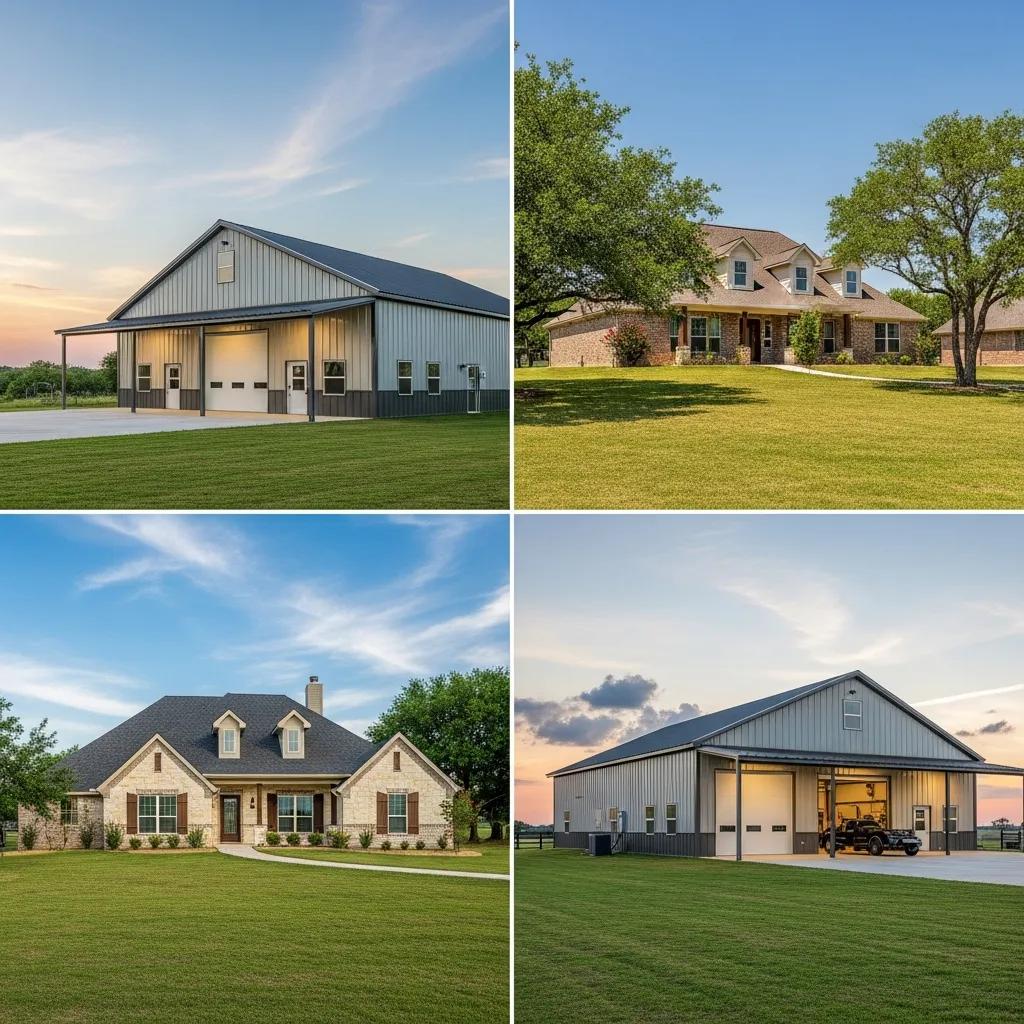
Barndominium vs Traditional Home: Costs, Value & Build Guide
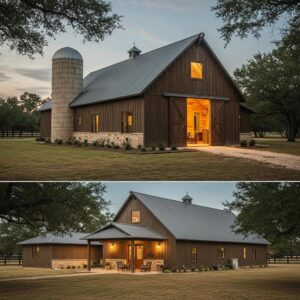
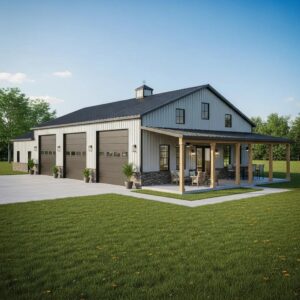
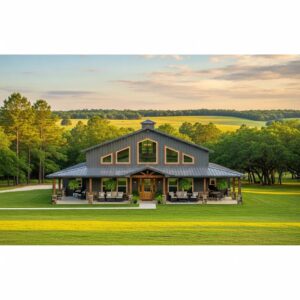
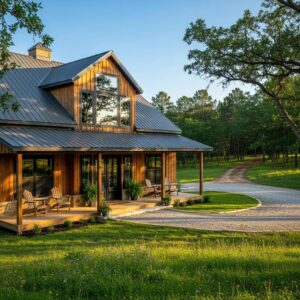
Barndominiums combine living space with usable workshop or storage areas and are typically built from metal building systems or post-frame assemblies. Traditional homes use conventional stick framing and are finished with brick, siding, or stone. This guide lays out the practical differences you’ll see in cost to build, long-term value, schedule, energy performance, and maintenance—with a focus on East Texas and West Louisiana. You’ll find per-square-foot ranges, the biggest cost drivers, financing and insurance considerations, and which buyer profiles usually favor each approach. We ground the numbers in regional construction realities, material price swings, and clear examples so you can turn estimates into realistic budgets and decisions.
What Are the Average Construction Costs for Barndominiums and Traditional Homes in East Texas?
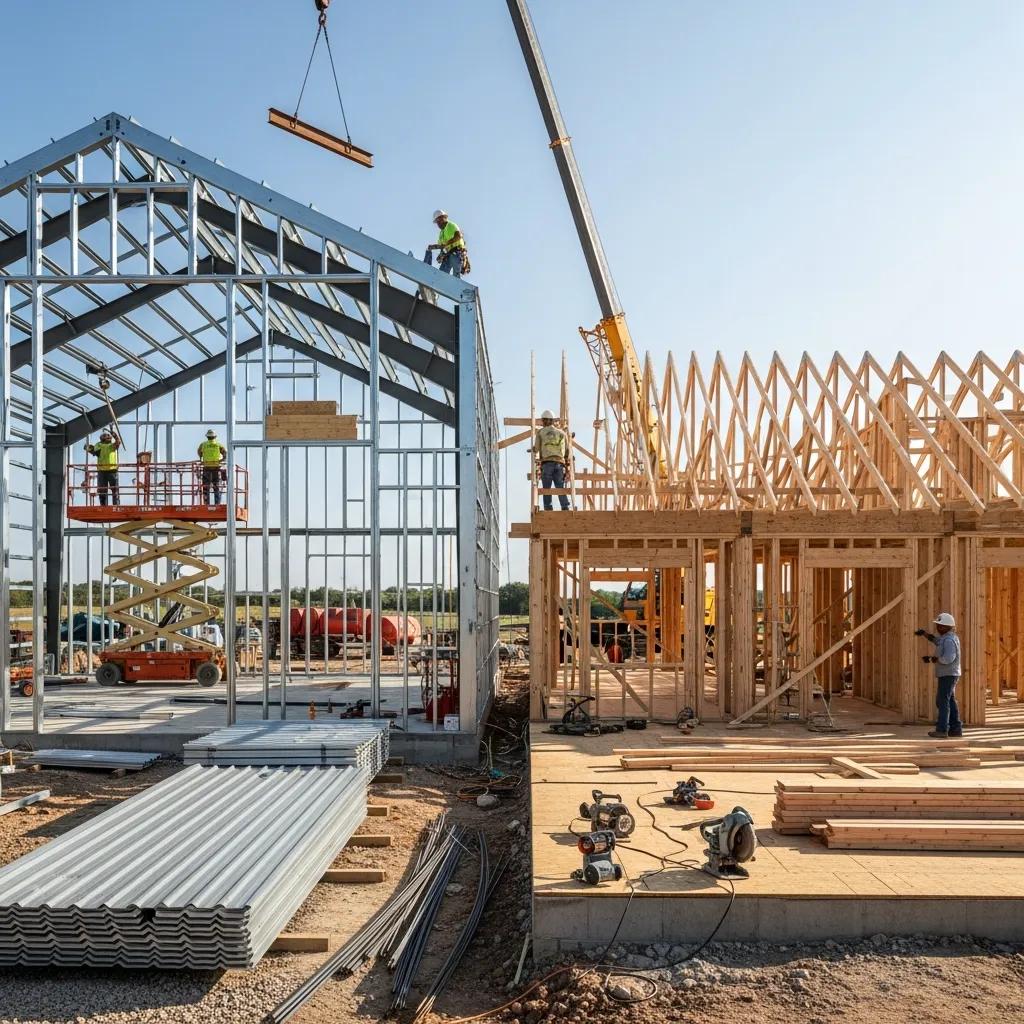
A regional cost snapshot helps set reasonable expectations: barndominiums in East Texas typically fall into a lower per-square-foot band than traditional houses because metal envelopes and post-frame systems reduce framing time and some material expenses. Conventional stick-built homes usually carry higher labor and finish costs. These ranges assume a basic shell, standard finishes, and a finished foundation—land, hookups, and upscale cabinetry are often extra. The key is knowing what each quote includes so you can weigh upfront savings against finish level and resale value.
Below is a compact table showing typical per-square-foot and project ranges for comparable sizes in the region.
| Project Type | Typical Size | Typical East Texas Cost Range |
|---|---|---|
| Barndominium (post-frame/metal) | 1,500–2,500 sq ft | $70–$140 per sq ft |
| Traditional stick-built home (mid-range) | 1,500–2,500 sq ft | $110–$200 per sq ft |
| Traditional custom/ high-end | 2,000–3,500 sq ft | $180–$250+ per sq ft |
That table highlights how barndominiums usually start lower per square foot, but finish choices and site work can change totals quickly. The section below breaks down why.
How Does Cost Per Square Foot Differ Between Barndominiums and Traditional Homes?
Per-square-foot differences come from the building system, labor intensity, and finish level. In East Texas, barndominiums commonly range from $70 to $140 per square foot depending on finishes; traditional homes typically range $110 to $250+ per square foot. The low end for a barndominium is a basic enclosed shell with standard insulation and economical interiors. The high end includes upgraded insulation, framed interior walls, and custom millwork. For example, a 2,000 sq ft barndominium could land between $140,000 and $280,000, while a similarly sized traditional home at mid-range finishes might be $220,000 to $400,000. These are directional figures—finish choices, foundation type, and site logistics drive the final number. Talk with local builders to get a project-specific estimate.
What Factors Influence Barndominium Construction Costs?
Barndominium pricing is driven by kit selection, steel pricing, insulation approach, foundation choice, and site-prep complexity. Custom interior millwork and larger HVAC systems push budgets up. Prefab kits or panels cut on-site framing time; fully custom post-frame systems add design and labor. Steel market volatility and installer availability can change cost month to month, so early material procurement or fixed-price contracts help control risk. Site factors like slope, soil conditions, septic or well needs, and utility access frequently add significant cost beyond the shell. Knowing these drivers helps you prioritize—investing in insulation and airtightness, for example, often lowers long-term energy bills and strengthens resale appeal.
This list summarizes the main barndominium cost drivers and their budget effects:
- Kit vs. custom: kits reduce framing labor and lead time; custom increases both.
- Material price volatility: fluctuations in steel and insulation move raw-material budgets.
- Site prep and foundation: grading, soil, and foundation type change totals materially.
- Finish level and systems: cabinetry, HVAC, and plumbing raise per-square-foot cost.
Next, we cover how traditional-home costs behave in the same region.
Which Cost Factors Affect Traditional Home Construction in Texas?
Traditional-home costs in Texas are driven by design complexity, specialty trades, and finish materials. Architectural features—multiple rooflines, complex foundations, custom trim—require more framing, roofing work, and skilled finish trades, which lengthen the schedule and raise cost. Permit fees, utility connection charges, and local labor supply also affect totals, especially in fast-growing exurban areas.
Key traditional cost multipliers include:
- Architectural complexity: curved walls, vaulted ceilings, and intricate roof systems.
- Premium exterior materials: stone veneer, custom masonry, and brick add material and labor costs.
- Interior customization: bespoke cabinetry, built-ins, and high-end flooring increase finish costs.
- Specialty systems: radiant heating, multi-zone HVAC, and advanced home automation add mechanical complexity.
Understanding these drivers makes it easier to compare true apples-to-apples budgets between a barndominium and a conventional house; the next subsection explains how specific design choices affect cost.
How Do Design Complexity and Materials Impact Traditional Home Costs?
Design decisions—open plans versus multi-level layouts, heavy masonry, or custom millwork—translate directly into higher framing, roofing, and finishing bills. An open plan can reduce partition walls but may require larger engineered beams; stone or brick exteriors add material and installation labor. Custom cabinetry and luxury finishes carry markups for both materials and specialist installers, producing nonlinear cost growth past the base model. For buyers who want predictability, limiting architectural complexity and choosing durable mid-range materials often delivers the best value. The next section looks at how financing ties into these choices.
What Are the Financing Options and Mortgage Considerations for Traditional Homes?
Traditional new construction commonly uses construction-to-permanent loans or conventional mortgages for speculative homes. Lenders underwrite based on detailed plans, budgets, and local appraiser comparables. Construction-to-perm loans disburse funds during build phases and convert to a permanent mortgage at completion, which requires thorough documentation and more lender scrutiny. Appraisers look to comparable sales and finished value, so high-end custom features must be supported by market data. Strong local lender relationships and experienced builders smooth underwriting; aligning design with appraisal expectations reduces financing friction and improves approval odds.
How Do Barndominiums and Traditional Homes Compare in Long-Term Value and Financial Considerations?
Long-term value depends on resale demand, durability, energy performance, insurance costs, and market fit. Barndominiums can earn niche premiums where buyers value shop or hobby space on larger lots. Traditional homes usually appeal to a broader buyer pool in neighborhood settings. Financing historically favored conventional homes, but lenders increasingly accept well-documented barndominium builds that meet code and provide finished living areas. Insurance companies price based on construction type and replacement cost—metal shells may lower some weather-related maintenance risks but can require different replacement methods, so comparing policies is important.
| Home Type | Financing Characteristics | Insurance / Resale Notes |
|---|---|---|
| Barndominium | Construction loans available; lender requirements vary | May need specialized insurance; resale depends on finish quality and market niche |
| Traditional Home | Broad lender acceptance; conventional mortgages common | Standard insurance products; wider resale market and appraisal comparables |
| Practical Verdict | Good documentation and quality finishes maximize value | Quality workmanship and site-smart design preserve resale across both types |
In short: thorough documentation, quality finishes, and market-aligned design improve long-term value for either type. The next subsection looks at resale trends.
What Are the Resale Value Trends for Barndominiums vs. Traditional Homes?
Resale trends show growing acceptance for barndominiums where buyers want flexible shop space—especially on larger rural parcels—while traditional homes keep broader market appeal and steadier comparables for appraisal. Barndominiums finished well, with good insulation and durable materials, tend to resell better than poorly finished shells. In parts of East Texas and West Louisiana, buyers actively seek metal-building homes with modern interiors, which helps liquidity for well-executed projects. Sellers improve appraisal outcomes by documenting code compliance, energy upgrades, and professional finish schedules that match local comparables.
How Do Financing Challenges and Insurance Costs Differ Between the Two Home Types?
Lenders commonly request finished interior specs, standard HVAC, and conventional foundations before converting construction loans on nontraditional builds—this can mean extra pre-construction design work. Insurers review replacement cost and materials; metal exteriors can reduce some maintenance risks but may need specialized endorsements or inspections. To reduce surprises, get lender pre-approval that spells out acceptable construction standards and request insurance quotes early. Comparing multiple lenders and carriers and presenting thorough build documentation helps align financing and coverage with your chosen approach.
What Are the Key Differences in Construction Process and Timeline?
Construction method and sequence shape schedule and cost certainty. Barndominiums often reach shell completion faster because metal panels and post-frame components are prefabricated and quicker to erect. Traditional homes require more sequential trades, inspections, and finish work, which lengthens schedules. A rapid shell reduces weather exposure and many scheduling risks; stick-built projects need more coordination between carpenters, masons, and finish trades. Earlier weatherproofing lets interior trades start sooner, tightening the schedule overall.
This timeline summary shows where time and budget concentrate:
- Design and permitting: decisions here steer every later cost.
- Shell/frame completion: faster with metal systems; longer with conventional framing.
- MEP and finishes: traditionally the most time-consuming phase with many specialty trades.
- Final inspections and occupancy: depend on local permitting cadence and inspector availability.
These phase differences directly affect project duration and cost control.
Why Are Barndominiums Generally Faster to Build?
Barndominiums are often quicker because metal panels and post-frame components can be ordered and erected fast, producing a weather-tight shell in days or weeks rather than months. Prefab or kit elements reduce on-site cutting and complex framing; fewer exterior specialty trades speed the early stages. Simpler rooflines and open-plan interiors also cut framing and trim time compared with architecturally complex traditional homes. Faster shells mean interior work starts sooner—letting you decide where to apply savings to finishes or energy upgrades.
What Are the Typical Construction Phases for Traditional Homes?
Traditional builds follow a multi-stage flow: design and permits, foundation, rough framing, mechanicals and envelope, insulation and drywall, finishes, and final inspections—each stage handled by specialist trades and governed by sequential approvals. Foundation work and utilities can constrain the early schedule; mechanicals and inspections often create mid-project bottlenecks. High-end finish work—millwork, stone, custom cabinetry—typically stretches the timeline and raises coordination needs among subs. Clear project management, realistic contingencies, and a single accountable team reduce delays and cost overruns; builders who take end-to-end responsibility can streamline decision flow and keep schedules on track.
How Do Energy Efficiency and Maintenance Requirements Compare?
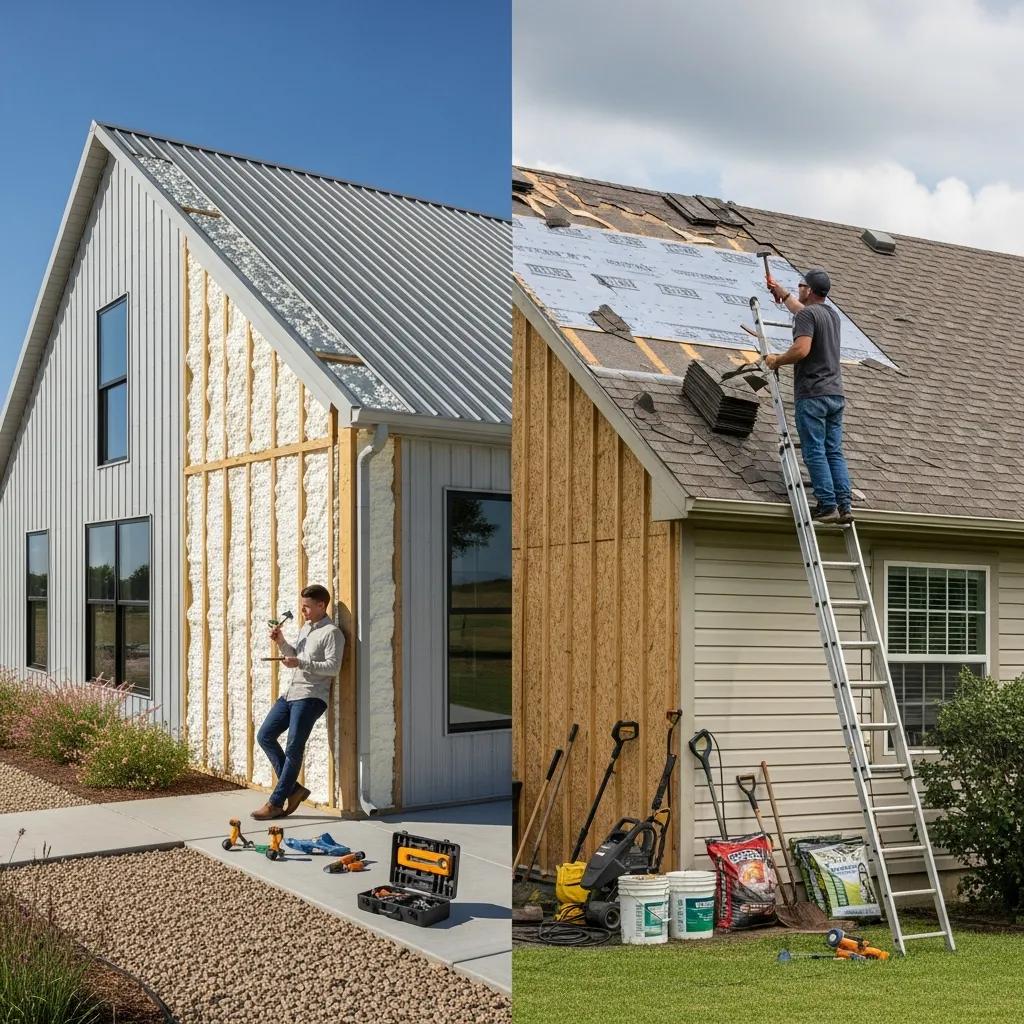
Energy performance and maintenance needs differ by envelope type. Barndominiums can deliver strong thermal performance with high R-value insulation and careful air sealing, but the metal envelope needs attention to condensation control and proper thermal breaks. Traditional homes offer many material choices and passive options but often need more routine exterior upkeep. HVAC sizing changes with the envelope—metal buildings may require different calculations because of thermal conductivity—so size systems by measured loads rather than rules of thumb.
Research supports the importance of thoughtful construction details to achieve energy and maintenance savings—especially in Texas housing.
Energy Efficiency & Maintenance Savings in Texas Affordable Housing
This research, using quantitative methodology, aims to investigate the current state of BIM performance regarding the approaches of converting “affordable residential housing” to “green affordable housing” by reducing the cost of maintaining units and improving their quality with a focus on saving in energy through the implementation of construction details us
Application of BIM in Energy Conservation in Low-Cost Housing in Case of Study in Dallas Independent School Residential District, Texas, V Karimimansoob, 2024
| Feature | Barndominium | Traditional Home |
|---|---|---|
| Typical Insulation Strategy | High R-value spray foam or batt with vapor management | Cavity insulation plus exterior sheathing and air barrier |
| HVAC Sizing | Sizing based on tighter envelope; can be smaller with good sealing | Standard sizing; ductwork integrated in framed cavities |
| Routine Maintenance | Metal roof/siding inspection, sealants, pest checks | Exterior painting/brick tuckpointing, wood trim upkeep |
| Estimated Annual Upkeep | Moderate if metal maintained; lower exterior rehabs | Moderate to higher for older materials and wood elements |
Both types can be efficient when detailed correctly; the next subsections highlight energy strategies and maintenance differences.
What Energy-Saving Features Do Barndominiums Offer?
Barndominiums have continuous metal envelopes that, when paired with high R-value insulation, reflective roofing, and thermal breaks, can produce low heating and cooling loads for rural homes. Common tactics include closed-cell spray foam at roof and walls to cut infiltration, radiant-barrier roofing to lower cooling loads, and correctly sized HVAC systems for open-plan layouts. Thoughtful orientation and overhangs reduce solar gain. With these measures, a barndominium can match traditional homes in operational energy costs while offering simpler exterior maintenance over time.
How Does Maintenance Differ Between Barndominiums and Traditional Homes?
Maintenance for barndominiums focuses on metal roof and siding inspections, sealant and flashing checks, and preventing condensation through thermal-bridge management; these tasks are periodic and often less frequent than repainting or wood repairs. Traditional homes need routine siding, trim, masonry, and shingle checks, with painting or tuckpointing as required by materials. Interior mechanical maintenance is similar for both, though traditional exteriors may demand more frequent attention in humid climates. Plan annual inspections and set aside maintenance funds to protect the building envelope and resale value.
Next, we offer practical guidance on which home type suits different lifestyles and budgets.
Which Home Type Is Right for You Based on Lifestyle, Budget, and Goals?
Your choice depends on priorities. Buyers focused on budget and flexible workshop or storage space often prefer barndominiums. Those seeking neighborhood compatibility, conventional resale liquidity, or architectural detail usually opt for traditional homes. Lifestyle needs—single-level living, low exterior maintenance, or large garage/shop space—align well with barndominiums. Families prioritizing schools and neighborhood amenities typically favor conventional homes. From a budget perspective, if upfront cost control and a simplified shell are priorities, a barndominium can deliver value; if maximizing neighborhood resale is the goal, invest in traditional finishes. Below are tailored notes for retirees and families, and how a consultative builder approach can align design with budget.
What Should Retirees Consider When Choosing Between Barndominiums and Traditional Homes?
Retirees should prioritize accessibility, low maintenance, and predictable operating costs. One-level barndominiums offer great accessibility and generally lower exterior upkeep; good insulation and HVAC design keep utilities manageable on a fixed income. Traditional homes with universal-design features and nearby services may suit retirees who value walkability and community amenities. Key checklist items: single-story layouts, minimal stairs, non-slip finishes, efficient HVAC, and low-maintenance exterior choices. Consult a builder early to fold accessibility and energy upgrades into the design to avoid costly retrofits later.
How Do Families Benefit Differently From Each Home Type?
Families look at bedroom count, storage, play areas, and school/neighborhood fit. Traditional homes in established neighborhoods usually score well on resale and community amenities. Barndominiums offer open living space, attached shops, and flexible footprints for families who need hobby or storage areas. Consider separation of sleeping and living zones, garage/shop adjacency, and yard layout for kids and pets. Families planning to resell in neighborhood markets should align finishes with local comparables; those staying long-term can prioritize lifestyle gains from a barndominium’s flexibility. Use a decision checklist—resale vs. lifestyle, maintenance tolerance, and school proximity—to guide the choice.
Ross Homes & Drafting, LLC works with clients to match design, budget, and site conditions through site-smart design and clear, no-surprise pricing that keeps one accountable team on the job. Our in-house 3D drafting speeds the design phase, clarifies spatial decisions, and helps homeowners visualize the cost impact of finish choices—leading to better budgets and faster permit-ready plans. For East Texas and West Louisiana clients aiming for durable materials, energy efficiency, and lender-friendly processes, partnering with a builder who provides these integrated services turns design intent into measurable cost and schedule outcomes.
Key decision checklist for choosing a home type:
- Define your top three priorities: budget control, resale value, or lifestyle features.
- Evaluate your site for utilities, access, and zoning that affect foundation and permit costs.
- Match finish-level expectations to your target resale market or long-term use plan.
Use this checklist to move to next steps: request an estimate, schedule a site review, or order preliminary 3D plans to validate budgets and timelines.
Frequently Asked Questions
What are the main advantages of choosing a barndominium over a traditional home?
Barndominiums can cost less to build, go up faster, and offer flexible workshop and storage space. A properly insulated metal building can be energy efficient and often has simpler exterior maintenance. The open floor plans make customization straightforward. Ultimately, your local market and personal priorities will determine whether those advantages matter for your project.
Are there any zoning or permit challenges specific to barndominiums?
Yes—zoning and permitting vary by jurisdiction. Some areas limit or regulate metal buildings used as primary residences, or they may have specific design standards. Check local codes early and work with a builder experienced in local permitting to avoid headaches and delays.
How do energy efficiency ratings compare between barndominiums and traditional homes?
Energy performance depends on design and materials. Barndominiums with high R-value insulation, good air sealing, and thermal breaks can perform as well as traditional homes. Traditional construction offers many insulation strategies too. The most important factor is quality of detailing and installation, not the category of the building alone.
What maintenance considerations should homeowners keep in mind for each type of home?
Barndominiums focus maintenance on metal roofs and siding, sealants, flashing, and condensation control. Traditional homes may require regular painting, siding repairs, and masonry upkeep depending on materials. Interior mechanical maintenance is similar for both. Budget for annual inspections to protect the envelope and resale value.
Can barndominiums be financed similarly to traditional homes?
Financing for barndominiums is increasingly available—many lenders offer construction loans for these builds—but underwriting can be stricter about specs and finishes. Traditional homes typically have wider mortgage options. Talk to lenders who understand both types to find the right product and avoid surprises.
What lifestyle factors should influence the decision between a barndominium and a traditional home?
Consider space needs, accessibility, and maintenance tolerance. Barndominiums suit buyers who want open layouts and workshop space; traditional homes fit buyers who prioritize neighborhood amenities, schools, and conventional resale. Think long-term about how you’ll use the property and who your likely buyer will be if you sell.
How do resale values typically compare between barndominiums and traditional homes?
Resale depends on market demand, finish quality, and location. Traditional homes usually enjoy steadier comparables and broader buyer appeal. Barndominiums can do very well in rural or niche markets where workshop space is valued—especially if finishes are high quality. Plan your finishes and documentation to match your target resale market if resale matters to you.