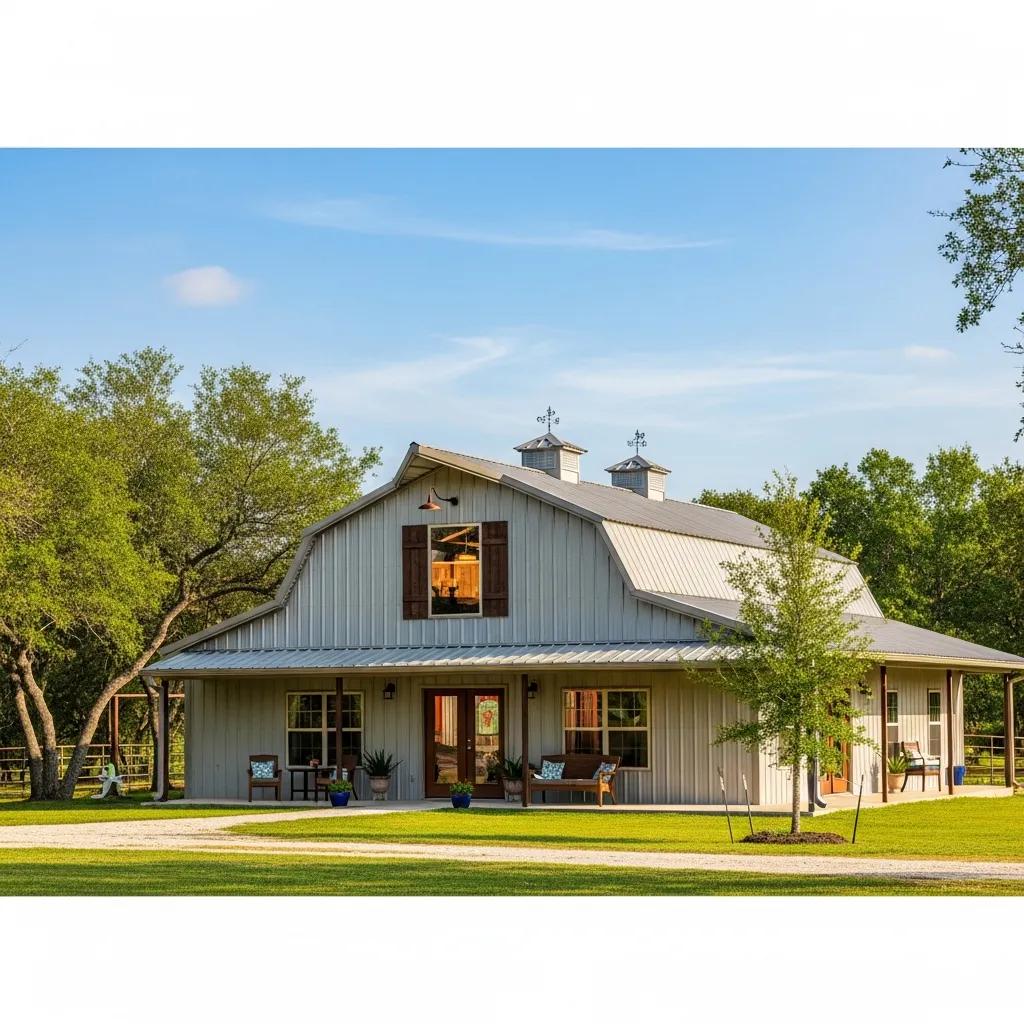
Barndominium Cost Per Square Foot in East Texas & Louisiana — Your Complete 2025 Guide
Barndominiums pair the durability and speed of metal building construction with fully customizable residential interiors. Knowing the cost per square foot is key when planning a build in East Texas or Louisiana. This guide explains why regional differences matter, outlines the biggest cost drivers, and shows how choices—from foundation type to interior finishes—change your effective $/sq ft. You’ll find 2025 cost ranges, how size and complexity move unit prices, the real differences between kit, shell, turnkey, and custom approaches, and practical financing paths that work for rural projects. We also cover permits, labor variations between the two states, provide comparison tables and checklists, and explain how a local builder delivers clear, line-item estimates. If you’re comparing options or preparing to request a quote, this guide gives the context and numbers you need to plan with confidence.
What Is a Barndominium and Why Choose One in East Texas & Louisiana?
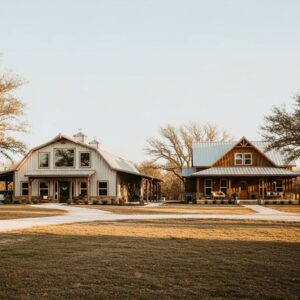
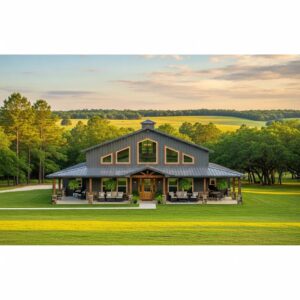
A barndominium is a metal building adapted for permanent living: a steel structural shell with traditional residential interiors. That shell-first approach—steel framing, metal roofing, then interior finishes—reduces framing time and exposure to pests while giving you flexible, mixed-use layouts for workshops, garages, or living space. For landowners in East Texas and Louisiana, barndominiums often mean lower long-term maintenance and better resistance to humidity, storms, and pests than many stick-built options. Knowing the trade-offs helps you choose whether to focus on a lower initial $/sq ft, a faster build, or higher-end finishes that raise the price per square foot. The sections that follow walk through design choices, cost ranges, and how build type shapes your total budget.
Ross Homes & Drafting, LLC brings local expertise to these decisions and supports custom barndominium projects across East Texas and Louisiana. As a third‑generation custom home builder, we emphasize transparency and detailed 3D plans so clients can see finish levels and line-item pricing before construction starts. Involving a local builder early reduces surprises from permitting and site work, and 3D plans make cost estimates more accurate and lender-ready. Use this local perspective to move from general $/sq ft ranges to a tailored budget for your parcel; the next subsections define barndominiums and list the primary regional benefits.
Defining Barndominiums: Metal Homes with Versatile Designs
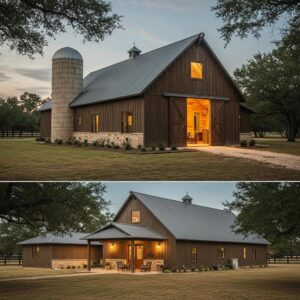
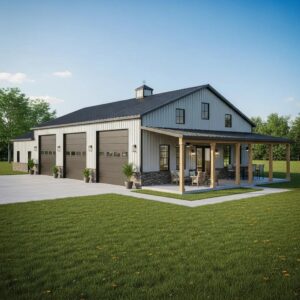
Put simply, a barndominium is a metal building converted to permanent residential use: steel framing, metal siding, and insulated panel roofing combined with conventional interior partitions and systems. The efficiency comes from erecting the structural envelope first, then installing HVAC, electrical, and plumbing like a standard house—this shortens weather-exposed time and lowers framing labor. Layouts range from open-plan living with workshop bays to lofted or two-story designs that add living area without complex load-bearing partitions. Compared to stick-built homes, barndominiums offer larger clear spans, simpler roof assemblies, and less vulnerability to termites, while still supporting standard residential finishes and mechanical systems. Knowing this structural model helps you see how materials and space planning affect $/sq ft and finish decisions.
The efficiency of steel framing is a major reason barndominiums can be a more affordable housing choice.
Light Steel Framing for Affordable Residential Construction
The construction industry in Sweden faces a shortage of affordable housing, so lowering construction costs and improving building efficiency are key concerns.
Light steel framing for residential buildings, M Veljkovic, 2006
Benefits of Barndominiums: Durability, Cost Efficiency, and Customization
- Durability and low maintenance: Steel framing and metal roofing resist pests and rot, cutting long-term upkeep and insurance exposure on rural properties.
- Faster enclosure and weather protection: Erecting the metal shell quickly reduces weather exposure, often lowering labor hours and schedule risk.
- Flexible floorplans and mixed use: Large clear spans make it easy to add workshops, ADUs, or storage without complex structural changes.
- Cost control through staged finishes: You can finish the shell first and add higher-end interiors later to spread cost over time.
- Climate suitability: A properly specified metal envelope with correct insulation and ventilation performs well in humid, storm-prone climates.
These advantages explain why many buyers accept a modest premium on appliances or finishes to secure a low-maintenance, adaptable structure that fits rural land. Next, we break down current regional cost ranges and translate those benefits into dollars per square foot.
What Is the Average Barndominium Cost Per Square Foot in East Texas and Louisiana?

In 2025, barndominium $/sq ft varies by build type, finish level, and local site conditions. East Texas generally sits in the lower-to-mid part of the range thanks to local labor availability and material access, while parts of Louisiana—especially sites that need elevation or flood mitigation—tend higher. For example, a 2,000 sq ft barndominium could total between $136,000 and $336,000 depending on region and finish level; the table below shows typical regional $/sq ft ranges by build type to help set expectations.
| Region | Build Type | Typical $/sq ft Range |
|---|---|---|
| East Texas | Kit / Materials Only | $20–$40 |
| East Texas | Custom/Builder-Finished | $68–$168 |
| Louisiana | Turnkey / Move-In Ready | $100–$200 |
The table highlights that kit prices are lower because they exclude assembly, site prep, and interior finishes, while turnkey numbers include full site work and finishes. These ranges do not include land purchase or major utility extensions unless specifically noted. Knowing what’s included in any quoted $/sq ft prevents underbudgeting.
Current Cost Ranges: Comparing East Texas and Louisiana Prices
Regional differences come from labor rates, site constraints, and permitting needs. East Texas often benefits from more contractor availability and easier site access, keeping costs moderate. In Louisiana, flood mitigation or heavier site prep can add $10–$40 per sq ft in some areas. Material supply, seasonal demand, and contractor availability in 2025 also affect pricing, so plan contingencies. A careful site assessment and a localized estimate are the best ways to turn broad $/sq ft ranges into an accurate total budget.
How Size and Design Complexity Affect Cost Per Square Foot
Size and complexity change unit pricing through economies of scale and feature multipliers. Large, simple shells spread fixed costs over more square feet and usually lower $/sq ft, while small builds or intricate designs raise it. For instance, a 1,200 sq ft custom barndominium often carries a small-build premium that increases $/sq ft by 10–20% versus a 2,400 sq ft model because foundations, utility hookups, and systems hit minimum costs. Complexity drivers—multiple rooflines, mezzanines, premium partitions, and large porches—require extra labor and materials and can add $15–$50+/sq ft depending on specs. Understanding these scale effects helps you balance features against a realistic per-square-foot budget and decide whether to stage finishes or go turnkey.
Which Factors Influence Barndominium Construction Costs in East Texas & Louisiana?
Costs reflect a mix of materials, site conditions, labor, and regulatory factors—each has a predictable impact on a sample 2,000 sq ft build. Knowing the main cost drivers lets you adjust scope to hit a budget without compromising essential needs. The table below lists major cost factors, typical ranges, and example impacts on a 2,000 sq ft project so trade-offs are concrete.
| Cost Factor | Typical Range / Unit | Example Impact on 2,000 sq ft Build |
|---|---|---|
| Foundation (slab) | $6–$14 / sq ft | $12,000–$28,000 additional |
| Site Preparation / Grading | $2,000–$20,000 lump | Varies by access and clearing |
| Insulation / Envelope Upgrades | $2–$12 / sq ft | $4,000–$24,000 for higher R-values |
| Interior Finishes (tiers) | $20–$80+ / sq ft | $40,000–$160,000 variance |
| Mechanical Systems | $8,000–$25,000 | HVAC/electrical/plumbing totals |
Materials and Finishes: From Basic Steel to Luxury Upgrades
Finish tiers drive much of the interior $/sq ft variance: a basic materials package with standard steel panels and economical finishes sets a low baseline, while premium insulation, custom cabinets, and high-end flooring push costs higher. Generally, finishes scale with material and labor intensity—custom cabinetry and engineered hardwood add far more per square foot than laminate or painted plywood. When planning, sort finishes into basic, standard, and premium tiers and estimate the per-square-foot delta for upgrades; this lets you target value engineering. In humid climates, durable mid-range materials often give the best lifecycle value by balancing initial $/sq ft with lower long-term maintenance.
Site Preparation and Foundation Costs: What to Expect
Site prep and foundation choice are often the single largest variables: grading, clearing, erosion control, and soil remediation add lump sums and per-square-foot costs. Concrete slab foundations typically run $6–$14 per square foot depending on soil and reinforcement needs; retaining walls, deep footings, or elevated systems for flood-prone sites can add substantially. Access, proximity to utilities, and septic or well permitting also influence early budgets and schedule. Accurately estimating these up front and coordinating site work with shell erection reduces downtime and unexpected premiums.
How Do Turnkey, Kit, and Custom Barndominium Builds Differ in Cost?
Build approach is a major determinant of $/sq ft. Material kits show the lowest upfront $/sq ft but exclude assembly and finish work; turnkey covers everything from site to keys and carries the highest $/sq ft; custom builds fall between, depending on how much owner-managed coordination you take on. The choice affects dollars, schedule, permits, and warranties. The table below summarizes typical inclusions and the $/sq ft ranges to help you choose the path that fits your budget and timeline.
| Build Type | What’s Included | Typical $/sq ft Range |
|---|---|---|
| Kit (Materials Only) | Structural panels, trusses, basic plans | $20–$40 |
| Shell / Builder-Installed Shell | Erected shell, basic envelope | $40–$90 |
| Custom Builder-Finish | Shell + interior finishes by contractor | $68–$168 |
| Turnkey / Move-In Ready | Full site work, finishes, systems, turnkey delivery | $100–$200 |
While kits reduce material spend, owners must still budget for assembly, inspections, utilities, and interior trades—items that often push final $/sq ft closer to builder-managed levels. The following subsections unpack kit vs. custom and what typical turnkey packages include.
Understanding Kit Prices vs. Custom Build Costs
Kit packages advertise material-only prices that look low, but costs keep accumulating after delivery: assembly, engineering, site-specific changes, and interior trades add to the total. Typical kit material ranges sit in the $20–$35 per sq ft band, but adding contractor assembly, foundation, utilities, and finishing trades can more than double that figure. Kits make sense if you can manage trade coordination, have access to affordable labor, or plan phased finishes—but they require more project management and carry scheduling risk. Always add conservative allowances for assembly and trades to any kit quote before comparing it to turnkey or custom builder offers.
Turnkey Barndominiums: What’s Included and Typical Pricing
Turnkey barndominiums deliver a move-in-ready product: site prep, foundation, shell erection, complete interior finishes, mechanical systems, permit coordination, and final inspections. Because turnkey covers the full scope and usually includes warranties and trade coordination, it carries the highest $/sq ft—commonly $100–$200 in areas with greater site constraints or higher labor rates. Turnkey builds reduce schedule and procurement risk for owners and often shorten delivery time because the builder sequences trades efficiently. When choosing between turnkey and owner-managed approaches, weigh the convenience premium against your ability to handle subcontractors and permit work.
What Are the Regional Cost Variations and Permit Requirements in East Texas and Louisiana?
Differences in labor, permitting, and environmental rules affect schedules and budgets. East Texas often has broader contractor availability in many rural counties, which can keep labor costs moderate, while some Louisiana parishes require extra site mitigation for wetlands or floodplains that adds cost and complexity. Contact local planning departments early and get a thorough site survey to avoid surprises and stay within expected $/sq ft ranges. The next subsections compare regional considerations and the regulatory items to watch when budgeting.
Rural builds come with unique challenges—especially around financing—which is important to factor into any project plan.
Rural Construction Costs & Financing Challenges
Construction in rural regions often faces tougher conditions than urban areas, including limited funding opportunities and constrained working conditions. Limited private investment for housing outside major centers can reduce construction activity in some regions.
Construction challenges in rural areas of Latvia: Costs, financing and housing stock, L Braslina, 2023
Comparing Labor Rates and Permit Fees Between Regions
Labor availability, prevailing wages, and contractor markups influence effective labor rates and therefore $/sq ft. East Texas counties often show competitive labor pools for rural residential work, while certain Louisiana parishes add regulatory steps that increase permit timing and soft costs. Permit fee structures vary—some jurisdictions use fixed fees for building permits and plan review, others apply percentage-based or tiered schedules that can climb for mixed‑use structures like barndominiums. When estimating, include a regional permit and inspection contingency (often 1–3% of construction cost) and check local offices early to confirm exact fees. Knowing the local landscape turns national benchmarks into accurate regional budgets.
Local Regulations Impacting Barndominium Construction Costs
Common regulatory cost drivers include required elevations in flood zones, septic system rules for rural parcels, setback enforcement that alters footprints, and protections for wetlands or riparian buffers. Mitigation—elevated foundations, flood-resistant materials, engineered septic systems—adds predictable costs but is essential for compliance and long-term resilience. Get geotechnical reports and septic/well feasibility studies where municipal utilities aren’t available; those technical inputs determine foundation design and utility routing costs. Addressing regulatory items early minimizes redesign, rework, and schedule delays that inflate effective $/sq ft.
How Can You Finance Your Barndominium Project with Ross Homes & Drafting?

Financing a barndominium usually means matching loan products to rural and metal-building specifics. Ross Homes & Drafting, LLC provides clear, itemized estimates and 3D plans that lenders prefer for underwriting. Common options include construction-to-permanent loans, conventional mortgages on completed homes, VA or USDA rural programs where eligible, and local lender products that understand rural property quirks. Detailed plans, itemized bids, and lender-ready documentation help translate a $/sq ft estimate into an approved budget and draw schedule. Below we outline typical financing routes and explain how Ross Homes & Drafting supports estimates and quotes.
As barndominiums grow in popularity, specialized financing options that recognize their construction type and rural appeal become increasingly important.
Barndominium Construction & Rural Financing
One example shows a barn converted into a barndominium used as a home, event space, and hospitality venue. Financing was a key step to acquire and adapt the property for its intended uses.
A Business Plan for The Three Barn Farm, 2018
Available Financing Options for East Texas and Louisiana Builders
Relevant financing options include construction-to-permanent loans that convert to a standard mortgage on completion, USDA Rural Development programs for eligible properties, VA loans for qualifying veterans that may cover construction, and local bank or credit union construction loans with regional underwriting experience. Each product has eligibility requirements—down payment, credit score, and appraisal standards—that affect feasibility, and lenders typically want detailed plans, itemized bids, and builder references to approve construction loans. Gather architectural or 3D plans, contractor estimates, and a site plan early to streamline approvals. The right financing path depends on your site, qualifications, and whether you choose a kit, custom, or turnkey approach.
Common financing routes include:
- Construction-to-permanent loans that fund building phases and convert to a mortgage.
- Government-backed rural programs (when eligible) that lower down payment needs.
- Local bank or credit union construction loans with regional underwriting expertise.
These options require clear scopes and line-item costs to align draw schedules with construction milestones. Knowing lender documentation needs before signing reduces delays and contingency costs.
How Ross Homes & Drafting Supports Transparent Cost Estimates and Custom Quotes
Ross Homes & Drafting follows a structured estimating process—site assessment, 3D drafting, line-item takeoff, and reviewed quotes—to create transparent, lender-friendly budgets that turn per-square-foot ranges into executable plans. We start with a site visit to document access, grading, and foundation needs, then produce 3D plans that clarify scope and quantities so trade bids are accurate and comparable. Clients get itemized estimates that separate shell, foundation, site work, and finish packages so lenders and owners can see exactly what any $/sq ft figure includes.
How the process helps with financing:
- Clear 3D plans reduce appraisal and underwriting ambiguity.
- Itemized quotes support lender draw schedules and limit change-order risk.
- Local experience informs realistic contingencies for permits and site issues.
This systematic approach moves owners from broad $/sq ft estimates to an actionable budget lenders and contractors can rely on.
H3: How Ross Homes & Drafting Supports Transparent Cost Estimates and Custom Quotes
At Ross Homes & Drafting we focus on detailed, line-item cost estimates that translate per‑square‑foot ranges into practical budgets for lenders and owners. Our 3D drafting is central to this—after a site assessment we refine material quantities and interior scope so subcontractor bids are consistent and comparable. That transparency reduces contingency padding and helps lenders see a clear scope tied to construction milestones. Prospective owners receive quotes that separate shell, site work, mechanicals, and finishes so they can choose staged approaches or turnkey delivery while keeping cost control.
- Summary: Working with a builder who provides itemized estimates and 3D plans simplifies financing and reduces hidden-cost risk.
Frequently Asked Questions
1. What are the typical financing options for building a barndominium?
Financing a barndominium usually involves construction-to-permanent loans that fund building phases and convert to a mortgage, government-backed rural programs (USDA) where eligible, VA loans for qualifying veterans, and local bank or credit union construction loans with regional underwriting experience. Each option has specific eligibility rules, so gather detailed plans, bids, and builder references early to speed approval.
2. How do local regulations impact the cost of building a barndominium?
Local rules can materially change costs. Flood-zone elevation requirements, septic regulations for rural lots, and environmental protections for wetlands or buffers all add to the budget. Some jurisdictions also have higher permit fees and more stringent inspections. Addressing regulatory issues early in the planning phase helps avoid redesign, delays, and unexpected expenses.
3. What are the advantages of using a local builder for a barndominium project?
Local builders bring practical benefits: they know regional codes, permitting processes, and common site challenges, and they typically have relationships with local suppliers and trades. That knowledge streamlines the process, improves scheduling, and often reduces cost. A local builder can also provide estimates tailored to your specific parcel so your budget reflects real conditions.
4. How can I ensure accurate cost estimates for my barndominium?
Work with a builder who provides detailed, line-item quotes and 3D plans. A thorough site assessment—grading, access, utility needs—and itemized takeoffs help identify cost drivers up front. When you gather clear scope and trade bids early, you reduce surprises and create a more reliable budget.
5. What are the common challenges faced when building a barndominium in rural areas?
Rural builds often face limited financing options, fewer available contractors, longer lead times for skilled trades, and logistics challenges on remote or difficult terrain. Regulatory hurdles like zoning and environmental restrictions can also add complexity. Planning, local expertise, and realistic contingencies help manage these risks.
6. What types of interior finishes are available for barndominiums?
Finishes range from economical options—painted drywall and laminate floors—to higher-end choices like custom cabinetry, hardwood floors, and premium fixtures. Group finishes into tiers (basic, standard, premium) to compare costs and prioritize where to spend for the best value and appearance.
7. How does the size of a barndominium affect its overall cost?
Size matters: larger builds usually lower the cost per square foot because fixed costs—foundation, utility hookups, mechanical systems—are spread over more area. Small builds often carry a small-build premium and higher $/sq ft. Complex rooflines, high-end finishes, and other design features also raise per-square-foot costs, so size and complexity are key budgeting decisions.