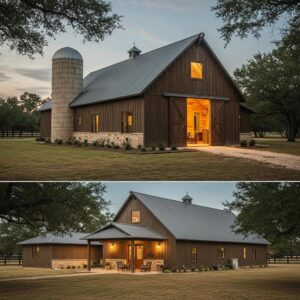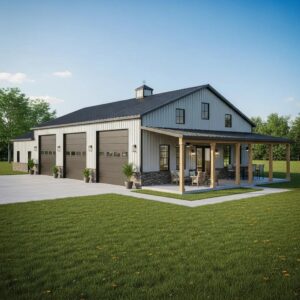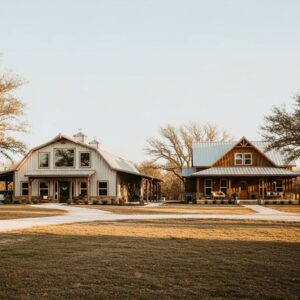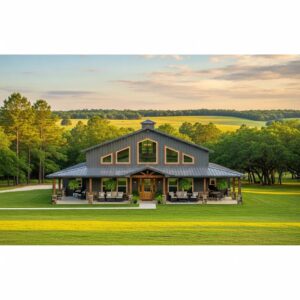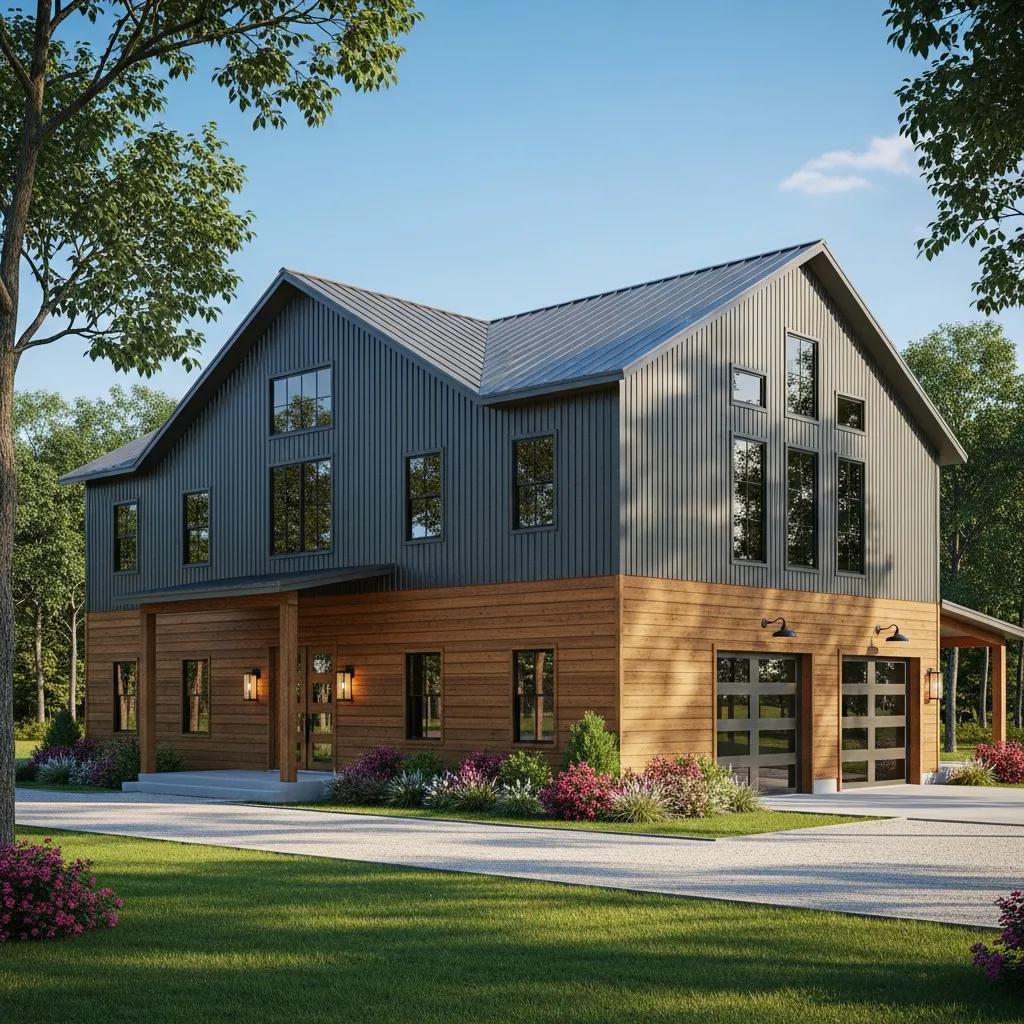
Why Build a Barndominium? Savings, Strength, Custom Living, and Energy Smarts — Explained
A barndominium blends a metal building shell with residential finishes to give a practical, cost-conscious alternative to standard stick-built homes. It’s a straightforward path to lower upfront costs, long-term durability, flexible layouts, and strong energy performance. This page breaks down how barndominiums save money during construction and over years of ownership, why steel and metal envelopes stand up to pests and weather, what customization opens the door to integrated shop or hobby space, and which efficiency choices cut utility bills. For many builders across East Texas and West Louisiana, barndominiums strike the right balance between tight budgets and lasting performance by using simpler framing, pre-engineered parts, and tough exterior materials. Below you’ll find clear comparisons to traditional homes, practical design and project-management tips, tables that show cost and lifespan tradeoffs, and honest advice about financing and resale. Read on for focused lists, EAV comparison tables, and real-world strategies that make barndominiums an attractive, modern option for families, retirees, and hobbyists.
Where Do the Biggest Cost Savings Come From?
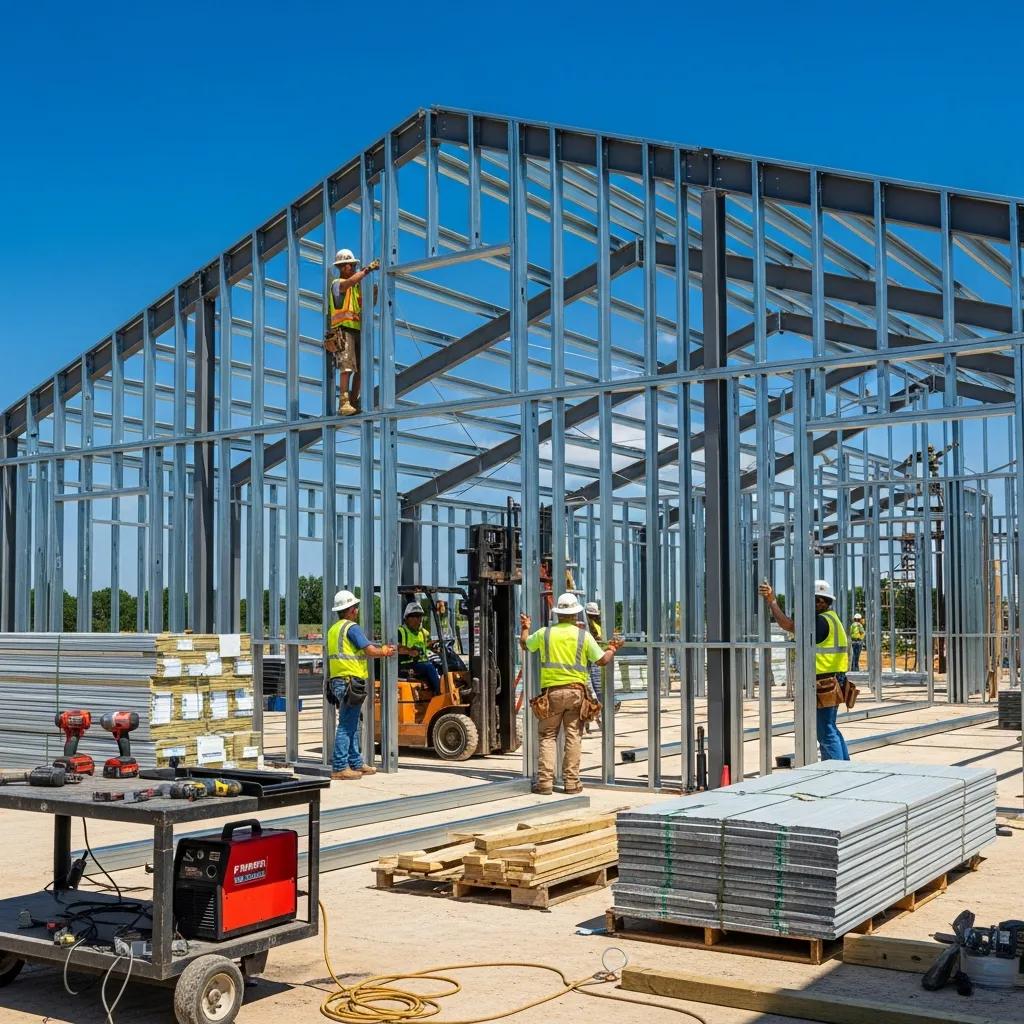
Barndominiums trim both initial build costs and ongoing ownership expenses by using a simplified metal shell, fewer interior partitions, and pre-engineered components that cut labor hours and material waste. The main savings come from having fewer trades on site and a shell that serves as both structure and exterior finish — that reduces framing time and speeds the build. Over time, metal siding and roofing need less upkeep than wood or asphalt, and with the right insulation a barndominium can lower heating and cooling bills. Below are the primary areas where a barndominium typically beats a conventional home on cost.
Primary cost advantages:
- Material savings from metal framing and simpler roof systems that reduce lumber waste and complicated connectors.
- Labor savings because pre-engineered parts arrive ready to assemble and fewer interior partitions are needed.
- Lower long-term maintenance because durable exterior materials cut repair frequency and expense.
Those benefits compound: shorter build timelines reduce interim financing and holding costs, shrinking total project expenses and getting you into the home sooner.
How Does a Barndominium Cut Construction Costs vs. Traditional Homes?
The cost reductions come from a simpler structural system and less interior partition work, which lowers framing and finishing labor. Pre-engineered steel frames or metal building kits arrive with many parts prefabricated, so on-site assembly replaces time-consuming stick-framing and reduces weather delays. That translates to fewer onsite labor hours and a more predictable schedule. Region, finish level, and site prep affect price-per-square-foot, but generally simpler rooflines and open plans give the best savings. When deciding where to spend, consider that upgrades to windows, insulation, or HVAC usually pay off more over time than elaborate interior trim on a metal shell.
What Long-Term Maintenance Savings Do Metal Siding and Durable Materials Provide?
Metal siding and roofing cut maintenance cycles and common exterior repair costs because they resist rot, termites, and many kinds of water damage that affect traditional cladding. Non-organic surfaces don’t feed decay fungi or wood-boring insects, and factory coatings on modern metal panels keep finishes protective for decades, reducing repainting and patchwork. Over 20–30 years owners often see lower cumulative maintenance expenses versus wood siding, and quicker recovery after storms since steel framing and metal panels withstand hail and wind better than some conventional materials. Those long-term savings free up budget for interior upgrades or energy-efficiency measures that further lower operating costs.
Different materials produce different cost and maintenance outcomes; the table below compares common choices so you can scan where savings show up.
Intro to cost comparison table: Use this quick reference when planning a barndominium budget — it highlights typical cost impacts and maintenance/lifespan notes to help you prioritize durable, low-maintenance components.
| Material Type | Typical Cost Impact | Notes (maintenance / lifespan) |
|---|---|---|
| Metal siding | Moderate initial cost, low upkeep | Resists rot and termites; minimal repainting; 30+ year finish with factory coatings |
| Steel framing | Moderate cost, labor-efficient | Inorganic; high resistance to pests and fire; long structural lifespan |
| Insulated panels | Higher upfront cost, energy-saving | Improves thermal performance; reduces HVAC runtime and operating bills |
| Metal roof | Moderate cost, long life | Durable against hail and wind; less frequent replacement than asphalt shingles |
This snapshot shows where up-front choices in durable materials can lower lifetime ownership costs by cutting repairs and energy use.
How Does a Barndominium Deliver Better Durability and Longevity?
Durability comes from core components — steel framing, metal siding, and engineered connections — that resist common degradation and extend service life. Steel framing won’t rot or attract termites, and when paired with good moisture detailing it performs well in wind, hail, and fire events. Site and design choices like raised foundations, planned drainage, and proper flashing prevent water intrusion, which is the main cause of premature deterioration in many homes. Owners who choose durable materials and perform routine inspections and targeted maintenance often extend a barndominium’s useful life for decades, making it a long-term, value-minded investment.
Why Are Steel Frames Resistant to Pests, Fire, and Harsh Weather?
Steel resists the biological and chemical processes that damage wood because it’s inorganic and doesn’t provide food for termites or mold. Without cellulose to feed on, insects and decay fungi can’t compromise steel members — provided corrosion control and moisture management are in place. Steel won’t burn like wood, though it does lose strength at very high temperatures and may need fire-protective detailing to meet code. In climates like East Texas and West Louisiana, a properly detailed metal envelope with secure fastenings and thoughtful site elevation reduces damage risk from heavy rain, wind, and hail and typically shortens repair cycles after storms.
What Lifespan Can Owners Expect from a Well-Built Barndominium?
When key components are specified for durability and maintained, a barndominium’s structure can last many decades. Industry observations commonly place structural lifespans in the 50–100 year range depending on exposure and maintenance. Steel framing and metal roofing often outlast equivalent wood systems if corrosion protection, finish coatings, and proper detailing are used. Individual components like roofs and windows have their own replacement cycles, so overall lifespan depends on choosing quality materials up front. Good site grading, drainage, high-performance insulation to avoid condensation, and regular inspections all extend service life; neglect or poor detailing shortens it.
Intro to durability EAV table: The table below summarizes key components, their durability strengths, and expected lifespan so you can see which choices matter most for long-term value.
| Component | Durability Attribute | Expected Lifespan / Benefit |
|---|---|---|
| Steel Frame | Pest and fire resistance | 50–100 years with proper coatings |
| Metal Siding | Corrosion-resistant finish | 30–50+ years with minimal maintenance |
| Metal Roof | Impact and wind resistance | 30–50 years depending on gauge and coating |
| Insulated Panels | Moisture control and thermal performance | Reduces condensation and extends envelope life |
Choosing durable components shortens replacement cycles and helps preserve structural value over time.
What Customization Options Make Barndominiums Flexible Living Spaces?
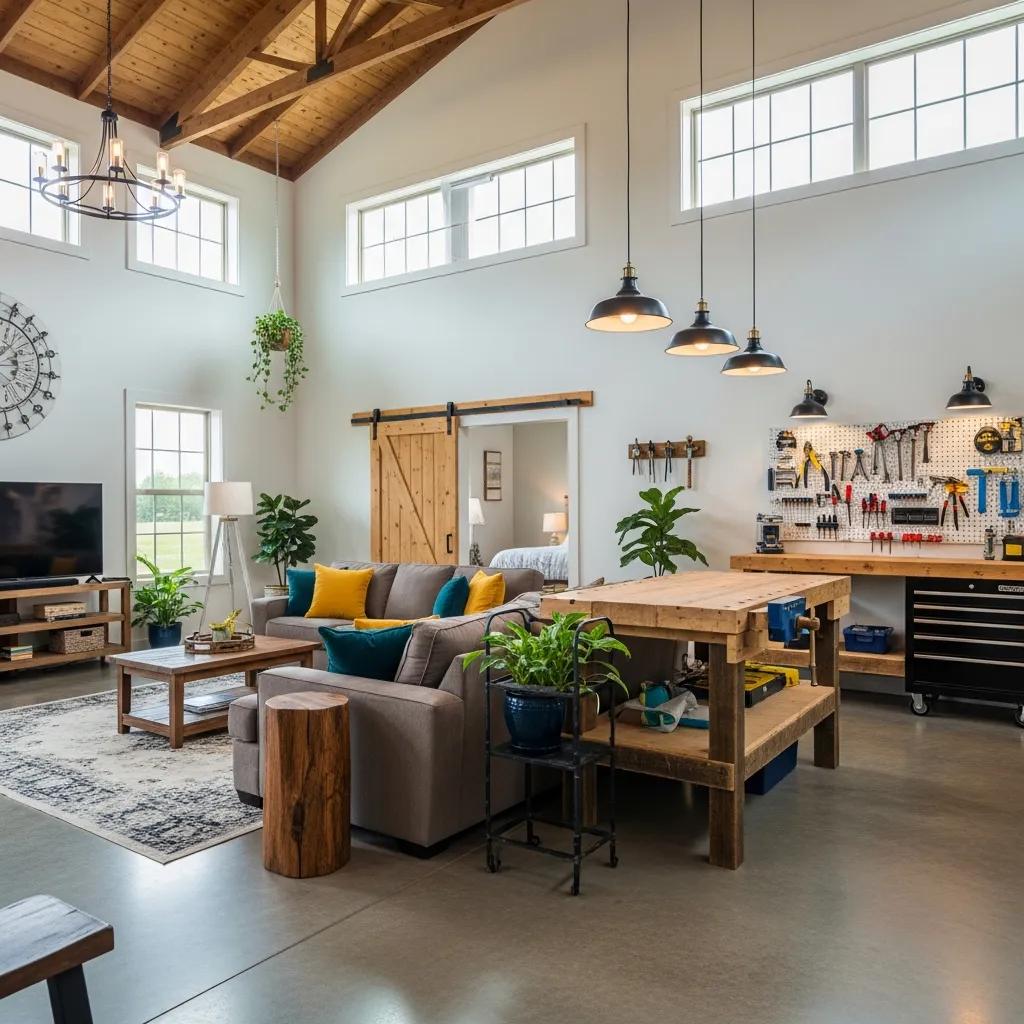
Barndominiums shine for flexible layouts, tall clear spans, and the ease of combining living areas with workshop or hobby space. The open-shell steel structure minimizes interior load-bearing walls, allowing wide clear spans and lofted ceilings that accommodate mezzanines, large garage bays, or big great rooms without complicated structural work. Because finishes are applied inside a durable metal shell, you can prioritize functional elements — an integrated shop, a mudroom, or multi-generational suites — while still creating a comfortable home. Using 3D visualization up front helps confirm room adjacencies, circulation, and acoustics before construction, which reduces change orders and aligns the finished house with how you live.
Common customization patterns we see:
- Open living cores that combine kitchen, dining, and living areas for flexible daily use and entertaining.
- Integrated shop or garage bays with direct interior access and sound separation for hobbyists or small business owners.
- Lofts or mezzanines that add usable square footage without increasing foundation or roof complexity.
These flexible options make barndominiums a fit for families, retirees who prefer single-level living with optional lofts, and owners who want workspace-connected homes.
How Do Open Floor Plans Increase Design Freedom?
Open plans work because the steel shell carries loads that would otherwise require many interior framing members. That creates wide, uninterrupted spaces that support flexible furniture layouts, easy traffic flow, and future reconfiguration as needs change. Interior partitions become optional instead of structural, so adding bedrooms or dividing workshop space into studios is often a modest renovation. Open plans also support aging-in-place by reducing narrow corridors and enabling wider doorways and accessible bathrooms. Visualizing layouts in 3D helps verify daylighting and circulation before committing to finishes, which reduces costly mid-build changes.
How Can Shop and Living Spaces Be Designed to Work Together?
Blending shop and living areas needs planning for noise control, HVAC zoning, ventilation, and storage so workshop work won’t compromise comfort or air quality. Practical steps include creating a buffer or mudroom between shop and home, using mechanical zoning to condition only occupied areas, and installing dedicated electrical and ventilation circuits for tools and dust control. Oversized doors, durable flooring, and direct exterior access improve functionality for hobbyists or small-business owners, while insulated partitions and targeted sound damping protect residential quiet. Early coordination with your builder and 3D drafting tools streamlines decisions and ensures utility routing and access meet lifestyle needs.
Planning custom shop-living layouts early reduces rework and makes sure mechanical systems and structural penetrations are coordinated for long-term performance.
Why Is Faster Construction a Key Benefit?
Faster construction lowers interim financing costs, gets you into the house sooner, and reduces exposure to material price swings and scheduling conflicts. Pre-engineered components and a simplified shell cut on-site framing time and reduce trade coordination — that’s the main reason barndominiums build faster. Because many elements are assembled rather than built from raw materials, typical timelines are often shorter than conventional homes. The result is predictable schedules, lower interim expenses like temporary housing or interest, and the ability to start enjoying the home or earning rental income sooner, which improves project returns.
Time benefits include:
- Less on-site framing and fewer finish-trade coordination issues than stick-built construction.
- Lower interim financing and holding costs thanks to shorter construction windows.
- Faster occupancy so owners can move in or generate revenue more quickly.
For anyone valuing schedule certainty and lower carrying costs, a barndominium is an efficient option.
How Do Pre-Engineered Components Speed Up Builds?
Pre-engineered kits and prefabricated panels move fabrication off-site into controlled factory settings and deliver ready-to-assemble modules to the jobsite. Typical prefabricated parts include frames, insulated wall panels, roof trusses, and sometimes window packages. Because they arrive dimensionally accurate, on-site crews assemble instead of cutting and fitting, trimming days or weeks from the schedule. That reduces weather delays and produces a predictable inspection and subcontractor sequence. For owners, this lowers labor risk, reduces scheduling uncertainty, and clarifies the path from groundbreaking to occupancy.
Research consistently shows the time and cost advantages of pre-engineered methods over traditional construction.
Pre-Engineered Buildings: Cost & Time Savings vs. Conventional Construction
Pre-engineered buildings shorten schedules and reduce overall structure costs by moving fabrication into factory settings and optimizing weight and material use. This comparative study demonstrates how PEBs deliver measurable time and cost advantages over conventional construction.
What Project Management Practices Keep a Barndominium Build Efficient?
Successful barndominium projects start with early site evaluation, a single accountable team, and thorough pre-construction planning that addresses access, utilities, drainage, and elevation before framing begins. One accountable team reduces handoffs between designers, suppliers, and contractors — cutting misunderstandings and delays. Integrating in-house 3D drafting validates design intent and coordination before hammer hits the nail. Proactively ordering long-lead items, staging the schedule to protect weather-sensitive work, and defining clear owner-approval milestones all help keep the build on time and limit costly change orders. These practices shorten timelines and protect budgets while preserving room for design choices.
How Do Energy-Efficient Choices Improve Barndominium Living?
Energy-efficient barndominiums combine high R-value insulation, tight air-sealing, Low-E windows, and right-sized HVAC systems to reduce heating and cooling loads and improve comfort. Reducing thermal bridging and air leakage cuts heat transfer, which lowers mechanical runtime and delivers measurable savings in climates with hot summers and mild winters like East Texas and West Louisiana. Installing these features during construction is cheaper than retrofitting later, and planning electrical work for solar or battery back-up keeps future upgrade options open. The net result is lower monthly bills, better indoor comfort, and stronger appeal to energy-conscious buyers.
Efficiency features to prioritize:
- High R-value insulation and sealed assemblies to minimize infiltration and stabilize indoor temperatures.
- Low-E windows to limit solar heat gain while preserving daylight and views.
- Right-sized HVAC with zoning to match conditioned space to occupancy and reduce cycling.
Prioritizing these systems during design delivers the biggest lifetime gains in energy use and comfort.
How Much Do High R-Value Insulation and Low-E Windows Help?
Insulation and Low-E windows work together to slow heat transfer and limit unwanted solar gain, cutting cooling loads in warm months and reducing heating demand in cooler weather. Insulation reduces conductive heat flow through walls and roofs while Low-E coatings reflect infrared energy to help keep interior temperatures steady. Together they can reduce annual heating and cooling energy use by a meaningful percentage depending on baseline construction. In East Texas climates, choosing region-appropriate insulation values and pairing them with continuous air barriers reduces condensation risk and improves comfort. The homeowner payoff is lower utility bills and a more consistent indoor environment that also protects building components.
Intro to energy EAV table: The table below lists common efficiency features, a performance metric for each, and estimated impact on energy use to guide design choices.
| Feature | Performance Metric | Estimated Energy Impact |
|---|---|---|
| High R-value insulation | R-value (walls/roof) | 10–25% reduction in heating/cooling loads |
| Low-E windows | Solar heat gain coefficient | 5–15% reduction in cooling demand |
| Right-sized HVAC | SEER / load-matched sizing | Reduced cycling and better efficiency |
| Air sealing & ventilation | ACH (air changes/hour) | Lower infiltration losses; improved comfort |
This table clarifies how each feature helps lower operating costs and extend envelope life.
How Are Modern Barndominiums Adopting 2025 Trends Like Smart Tech?
Contemporary barndominiums commonly include smart thermostats, energy monitoring, and electrical planning for future solar and battery integration so owners can manage performance and costs. Smart thermostats adapt runtimes to occupancy and can reduce HVAC energy use; energy monitors provide useful feedback that encourages conservation and verifies investments. Designing electrical systems to be solar-ready and battery-capable during construction avoids costly retrofits and boosts resilience during outages. These technologies pair well with durable building systems to create comfortable, efficient homes that match modern expectations for convenience and sustainability.
Adding smart controls and renewable-ready electrical planning early keeps future upgrade costs down and helps ensure your efficiency investments produce measurable savings.
What Concerns Do Buyers Have — and How Do We Address Them?
Common questions include financing, resale, insurance, and permitting. These are manageable with informed planning, quality construction, and clear project management. Financing options often include construction-to-perm loans and portfolio lenders that understand non-traditional shells — borrowers should present solid plans, cost estimates, and realistic timelines. Resale value follows the same fundamentals as any home: location, build quality, finishes, and market demand. Quality finishes, practical floor plans, and site-smart design (access, utilities, drainage, elevation) help maintain marketability. For insurance, durable materials like metal roofing and insulated walls generally mean fewer claims; documenting materials and specs helps insurers evaluate risk accurately.
Direct mitigation strategies:
- Financing: Work with lenders that offer construction-to-perm or portfolio options and supply thorough documentation to speed approval.
- Resale: Choose quality finishes, practical layouts, and site-smart design that align with local buyer expectations.
- Insurance: Specify durable materials and detailed construction documents so insurers can assess coverage and premiums fairly.
Taking these steps reduces perceived risk and smooths the path from planning to long-term ownership satisfaction.
How Does Financing Work in East Texas and West Louisiana?
Financing usually follows construction-to-perm loans or portfolio lending. Lenders want a clear budget, a realistic schedule, and an accountable builder to satisfy underwriting. Precise cost estimates, realistic timelines, and an experienced team that handles permitting and inspections increase lender confidence. Builders who provide financing-friendly workflows and thorough documentation of site-smart design and energy features make the process easier for borrowers. For owners, having complete plans, contingency allowances, and signed contractor agreements before application improves approval chances and speeds draws.
Do Barndominiums Hold Value Like Traditional Homes?
Barndominiums can retain value when they follow the same appraisal basics as traditional homes: good location, solid construction, practical finishes, and market-aligned layouts. Customization that appeals to a wide buyer pool, quality windows and insulation, and smart site placement support resale; extremely specialized interiors can narrow buyer interest. Investing in high-performance insulation, Low-E windows, and properly sized HVAC raises both comfort and marketability. In short, treating a barndominium as a quality custom home with an emphasis on durability and site-smart design preserves value over time.
About our services: Ross Homes & Drafting, LLC acts as a straightforward, accountable builder that helps clients navigate budgeting and financing by offering transparent, no‑surprises estimates and in-house 3D drafting to confirm designs for lenders and owners. We emphasize site-smart planning — access, utilities, drainage, elevation, and setbacks — so permit hurdles and lender questions get handled early. If you want to see a design before committing, we provide 3D plan visualization and manage projects from start to finish to simplify lender paperwork and reduce the chance of costly mid-build changes.
Ready for an estimate or a 3D plan demo? Contact a knowledgeable, accountable builder to streamline financing conversations and turn design ideas into lender-ready documentation while keeping the process transparent from start to finish.
Frequently Asked Questions
What environmental benefits come with building a barndominium?
Barndominiums can be more environmentally friendly when built with efficiency and durability in mind. High R-value insulation and Low-E windows reduce energy use for heating and cooling, cutting greenhouse gas emissions. Durable metal siding and roofing last longer and need fewer replacements, which lowers waste over time. Coupling those choices with thoughtful site work and construction practices helps reduce the home’s overall carbon footprint.
How do insurance costs for barndominiums compare to traditional homes?
Insurance costs vary, but barndominiums built with durable materials like metal siding and roofing often attract favorable rates because they resist fire, pests, and some storm damage. Insurers will want to see construction details and materials, so providing complete documentation helps them assess risk. Talk to agents who know barndominiums or similar metal-frame homes to find the best coverage and rates.
What financing options exist for barndominium builds?
Typical financing options include construction-to-perm loans and portfolio loans from lenders familiar with non-traditional homes. Lenders generally ask for detailed plans, accurate cost estimates, and a clear schedule. Some require a builder experienced with barndominiums. Shop lenders and prepare complete documentation to improve your odds of approval and get better terms.
Can barndominiums be customized for specific lifestyles?
Absolutely. Barndominiums are highly customizable — open floor plans and clear-span structures make it easy to add workshops, hobby spaces, or multi-generational suites. Work with a designer to develop layouts that reflect how you live while keeping the structure and systems coordinated for long-term performance.
What common challenges should I expect when building a barndominium?
Common challenges include local zoning and permitting, securing financing, and finding builders experienced with barndominium specifics. You can mitigate these issues by researching local codes, lining up lenders early, and hiring a team with relevant experience. Early planning and clear documentation smooth the process.
How do barndominiums perform on resale?
When built with quality materials and sensible layouts, barndominiums can hold their value similarly to traditional homes. Location, construction quality, and market demand drive resale outcomes. Broad-appeal finishes and energy-efficient features help maintain marketability, while highly specialized interiors may limit the buyer pool.