2025 Barndominium Design Trends: Practical Architecture, Livable Interiors, and Energy-Smart Strategies
Barndominiums — metal building homes that pair open agricultural shells with comfortable living — keep evolving in 2025 as designers blend industrial toughness with everyday livability. This guide walks through the architecture and interior trends shaping modern barndominiums, the insulation and renewable-ready choices that cut operating costs, and the smart-home and regional decisions that matter most for East Texas and Louisiana properties. You’ll get clear lists of exterior styles and interior layouts, side-by-side comparisons of insulation approaches, and practical recommendations for materials and floor plans so you can weigh trade-offs and plan a build that fits family life, retirement needs, or a shop-first lifestyle. Wherever possible we include actionable examples and local considerations so you can translate trends into real decisions for your lot and budget.
What Are the Top Barndominium Architecture Trends for 2025?
In 2025 barndominium architecture leans into hybrid looks, durable systems, and flexible forms — marrying the structural clarity of metal buildings with layered materials and human-scale proportions. These trends aren’t just aesthetic: they reduce maintenance, create adaptable floor plates, and add curb appeal that helps resale. Knowing the trade-offs between roof profiles, cladding mixes, and steel-frame detailing helps you prioritize drainage, insulation strategy, and long-term upkeep. Below is a concise list of the trends worth watching and why each matters for performance or value.
Top six architecture trends for 2025:
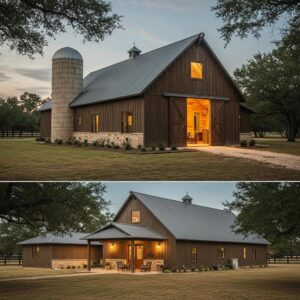
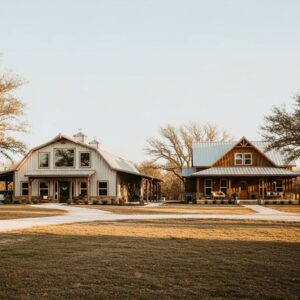
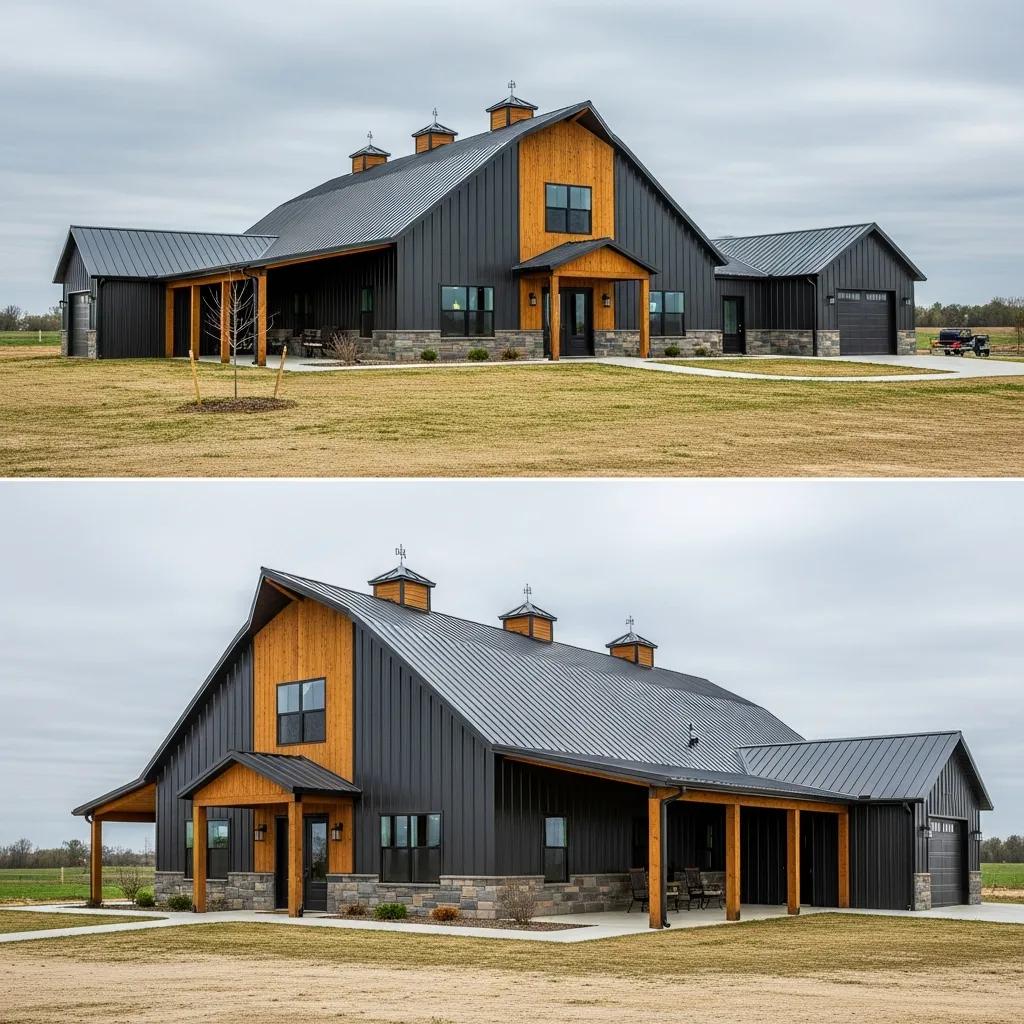
- Modern–rustic facades that pair dark metal with warm wood accents for contrast and approachability.
- Mixed-material cladding—metal, stone veneer, and reclaimed wood—to balance durability with texture.
- Varied rooflines—gable, shed, and low-slope—to create layered massing and support lofts or shop bays.
- Exposed structural elements and open trusses that celebrate industrial character and allow wide spans.
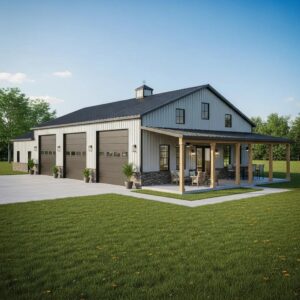
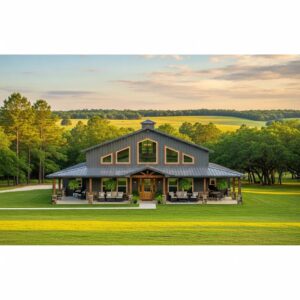
- Integrated covered porches and wraparound entries that extend living space and shield façades from sun and rain.
- Steel-frame assemblies combined with continuous exterior insulation to enable large, open interiors while improving longevity.
Those choices drive maintenance needs and cost differences—so the next sections compare materials and detailing to clarify outcomes for different approaches.
How Are Modern and Rustic Styles Blending in Barndominium Exteriors?
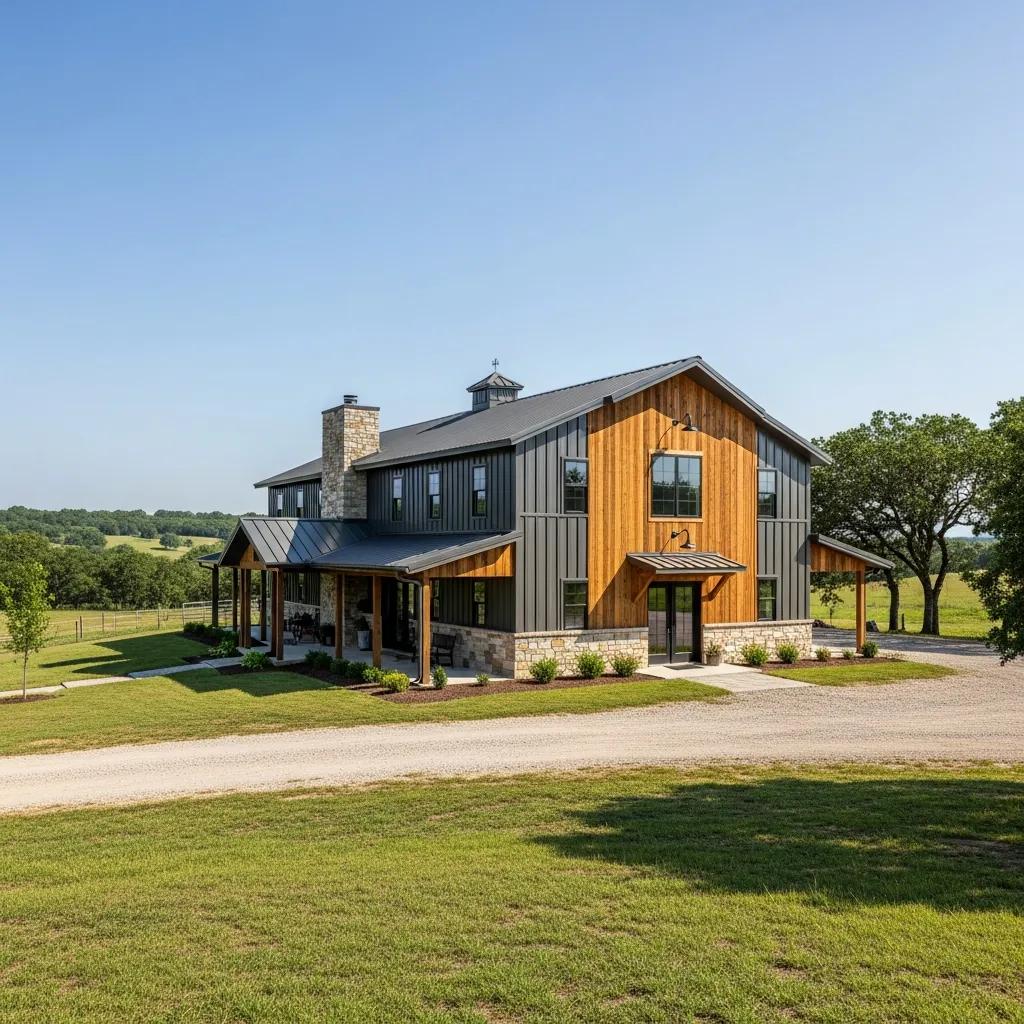
Designers are using clean metal panels as a simple background and adding tactile accents—wood or stone—at porches, gables, and base walls to create a friendlier, human-scaled exterior. Dark metal fields simplify upkeep and give a contemporary silhouette, while selective wood or stone introduces warmth and texture. That mix helps metal volumes sit naturally in rural settings, but it does require rot-resistant wood treatments and UV-stable finishes in humid climates. Treat metal as the dominant plane and wood as the accent to keep maintenance predictable and let the rustic elements age gracefully, especially where storms and sun are factors.
Which Roofline Designs Are Popular in Contemporary Barndominiums?
Gables, single-slope (shed) roofs, and low-slope systems are all popular for different reasons. Gables create loft opportunities and a familiar profile but need attention to ridge ventilation and water shedding. Shed roofs give a modern minimalist aesthetic and clear drainage paths, while low-slope roofs provide a sleek look and are ideal for mounting solar arrays or clerestories. Each roof choice affects interior volume, daylighting, and moisture management, so pick the form that matches your program—lofts, integrated shop space, or long-span storage—and plan the waterproofing details accordingly.
| Design Element | Material / Approach | Typical Outcome / Consideration |
|---|---|---|
| Roofline | Gable vs. Shed vs. Low-slope | Gable suits lofts; shed suits clean modern lines; low-slope needs more advanced waterproofing |
| Exterior Mix | Metal siding + wood/stone accents | Durable primary plane with warm focal points; requires careful moisture detailing |
| Structural Frame | Steel-frame vs. conventional timber | Steel allows long spans and open plans; thermal bridging must be managed |
Ross Homes & Drafting, LLC brings these modern–rustic strategies into our custom barndominium plans and 3D renderings so clients can preview mixed-material facades and roofline options before construction. As a family-owned, client-focused design and planning resource, we prioritize clear communication, quality workmanship, and straightforward, no-hidden-fee estimates. Homeowners in East Texas and Louisiana can request plan reviews or consultations to see how materials and roof choices perform on their lots, aligning style with durability and budget.
How Are Barndominium Interiors Evolving in 2025?
Interior design for barndominiums in 2025 favors open, multi-purpose spaces, refined finishes that balance the industrial shell, and low-maintenance systems suited to family life and aging-in-place. Open plans emphasize flexible circulation, daylight, and sightlines between living areas, kitchens, and shop-adjacent zones. Durable finishes—polished concrete, engineered wood—and acoustic solutions help temper reverberation in large volumes. Accessibility features like zero-step entries and single-level layouts are increasingly common, preserving the roomy barn feel while making the home practical for long-term living. The table below compares common interior choices and the homeowner value they deliver.
| Interior Feature | Typical Implementation | Value to Homeowner |
|---|---|---|
| Open concept | Remove interior walls + engineered supports | More light, adaptable space, and easier supervision of activities |
| Polished concrete floors | Sealed finish, optional radiant heating | Very durable, low maintenance, and useful thermal mass |
| Vaulted ceilings & exposed beams | Exposed trusses or glulam timbers | Creates dramatic volume, allows lofts, and shows structural character |
What Defines Modern Barndominium Interior Design and Layouts?
Modern barndominium interiors focus on open living, intentional daylighting, and defined zones that remain intimate within large volumes. Steel or engineered timber lets you design long, column-free spans so kitchens, living areas, and shops flow together while subtle partitions—half-walls, cabinetry, or furniture—create separation where needed. Generous windows, clerestories, and sliding doors bring daylight deep into the plan, cutting artificial-light demand and supporting passive comfort. Designers then add rugs, upholstered elements, and suspended acoustical baffles to control echo and make the space feel warm and livable.
Which Luxury Features Are Trending in Barndominium Kitchens and Bathrooms?
Luxury in 2025 is practical: large islands that serve as prep and dining space, custom cabinetry with tool and gear storage, walk-in spa showers, and resilient yet refined flooring like sealed concrete or engineered wood. Homeowners want high-performance fixtures and durable countertops that handle workshop traffic and pets while still looking premium. Heated floors, zoned ventilation, and targeted comfort upgrades in bathrooms and kitchen plinths are common—chosen to make daily life predictable and comfortable without adding excessive maintenance.
What Are the Leading Energy-Efficient Features in Barndominiums?
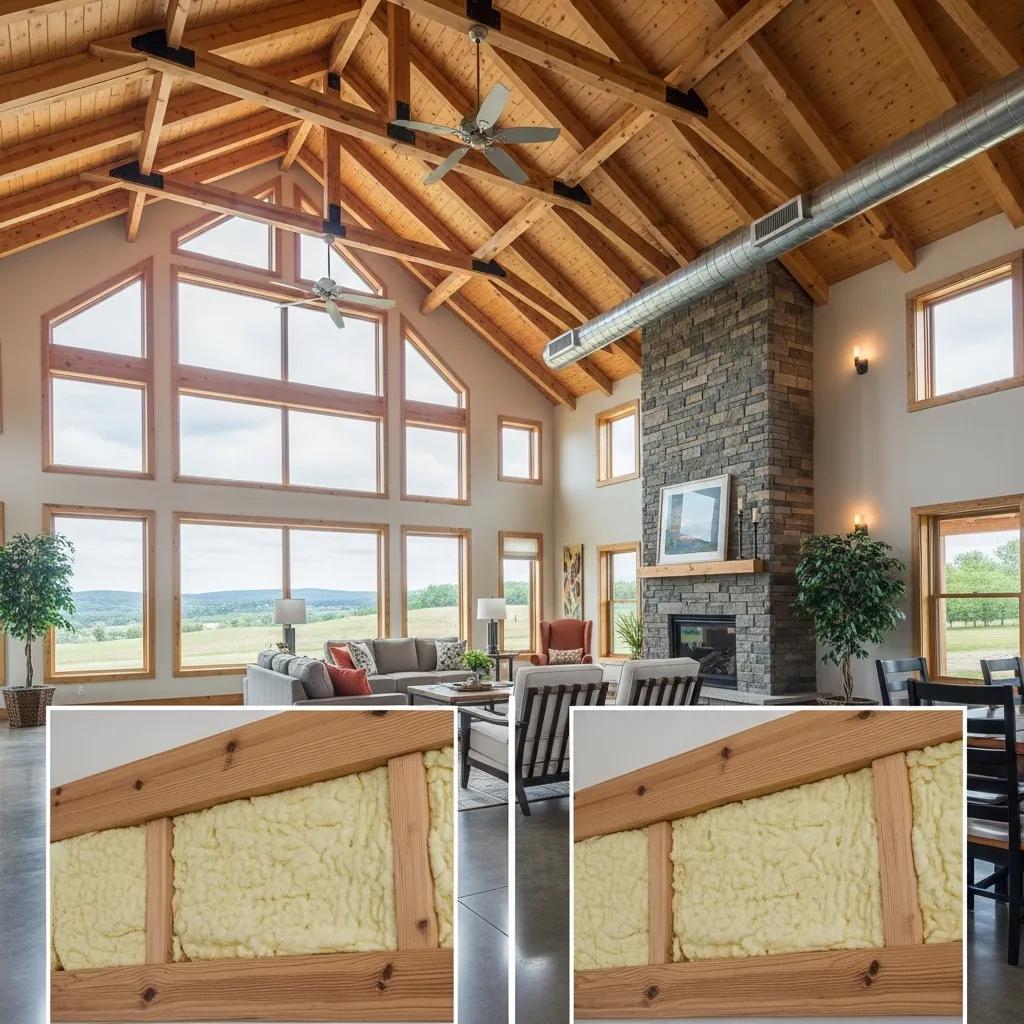
Barndominiums can be energy efficient when assemblies and passive strategies are planned from the start. Key moves include high-R-value insulation, continuous exterior thermal barriers, solar-ready roofs, and properly sized HVAC systems. A thermal envelope that addresses steel-frame thermal bridging and uses continuous insulation reduces heat transfer. Passive design—orientation for daylight, shading, and careful window selection—lowers HVAC loads and improves comfort. The table below compares common insulation approaches so you can weigh cost, performance, and longevity.
| Insulation Strategy | Attribute | Benefit / Value |
|---|---|---|
| Spray foam (closed-cell) | High R-value per inch; acts as air barrier | Excellent air sealing and thermal break; higher upfront cost |
| Rigid continuous exterior insulation | Reduces thermal bridging | Improves whole-wall R-value and lowers HVAC sizing needs |
| Batt insulation + interior air barrier | Cost-effective | Lower upfront cost but requires careful sealing to avoid thermal paths |
How Does Steel Frame Construction Enhance Energy Efficiency?
Steel framing gives long-term durability and big open spans, but steel conducts heat — so detail the envelope to minimize thermal bridging. Best-practice assemblies pair continuous exterior insulation, thermal break clips, or insulated metal panels to interrupt conductive paths and preserve wall R-value. Combine a sealed air barrier, controlled ventilation, and right-sized HVAC equipment to reduce energy use and control moisture in humid climates. With those strategies, steel frames let you enjoy large, vaulted interiors without sacrificing energy performance.
What Sustainable Materials and Technologies Are Used in Barndominiums?
Sustainable choices include reclaimed or FSC-certified wood for accents, low-VOC finishes for better indoor air, LED lighting, and solar-ready roof details for future PV installation. Durable materials—metal siding, stone veneer, sealed concrete—cut lifecycle costs by reducing replacements. Planning for energy storage and future battery or solar integration keeps your home adaptable as technology improves. These selections support environmental goals and healthier indoor environments, which many families and retirees prioritize for long-term livability.
How Is Smart Home Technology Integrated into Barndominium Living?
Smart-home tech ties convenience, security, and energy management together in open-plan barndominiums: networked controls for climate, lighting, security, and shop systems make large spaces easier to run. Integration respects the exposed-beam aesthetic by routing wiring through discreet chases, matching device finishes to materials, and placing central controllers in service areas to reduce visual impact. Automation can optimize HVAC schedules, control zoned lighting, and provide remote monitoring for detached shops. The list below highlights automation features that deliver clear value in a barndominium context.
- Smart thermostats that learn occupancy patterns and trim energy use when you’re away.
- Networked security cameras and smart locks for remote access and real-time alerts.
- Automated lighting scenes and occupancy sensors to improve comfort and cut waste.
- Garage and shop automation for remote control of large doors and integrated equipment circuits.
Which Automation Features Improve Convenience and Security?
High-value automation focuses on the mixed-use nature of barndominiums: reliable smart locks and cameras for remote site monitoring, thermostats that handle large thermal masses, and hubs that coordinate lights and appliances. Smart locks let you grant contractor access without a key, cameras with cloud alerts give peace of mind to remote owners, and thermostats plus zone dampers reduce slow temperature swings by optimizing run time and preconditioning. Together these systems simplify daily life and improve safety for homes that double as workshops.
How Do Smart Systems Complement Barndominium Design?
Smart systems boost performance without stealing the look: run wiring through service cavities or matching conduit, choose device finishes that blend with metal and wood, and hide speakers or sensors behind soffits or inside beams. Automation supports adaptive comfort—pre-cooling shaded zones, scheduling shop ventilation, or staging lighting scenes—so the architecture and systems work together to keep the home comfortable and efficient while preserving the design intent.
What Exterior Styles and Materials Define 2025 Barndominiums?
Exterior styling in 2025 favors material contrast, durable finishes, and palettes tuned to the landscape and climate to keep façades approachable and low-maintenance. Designers pair standing-seam or corrugated metal with wood accents, stone bases, or textured panels to create layered depth and emphasize entries. Finish choices account for heat absorption, fading, and upkeep in humid or sun-exposed settings, and many specify higher solar-reflective coatings on broad south- and west-facing walls. The short list below outlines practical palettes and finish strategies that work well for barndominiums.
Intro paragraph for palettes and finishes: these palette suggestions balance modern contrast with regional suitability.
- Matte black metal panels with warm cedar accents for crisp, contemporary contrast.
- Deep forest green metal with a limestone or stone veneer base to blend with rural surroundings.
- Dark bronze metal with soft honey wood stains to reduce heat gain while keeping rustic warmth.
Which Mixed Material Combinations Are Trending for Barndominium Exteriors?
Popular pairings include metal siding with reclaimed wood accents, stone veneer at foundation levels, and fiber-cement panels in secondary planes for texture and low upkeep. Metal gives weather resistance, stone anchors the base visually and physically, and wood adds human scale. In coastal or high-humidity areas, prioritize rot-resistant details and elevated porch thresholds so the mixed materials perform well over time.
| Material Combination | Characteristic | Maintenance Note |
|---|---|---|
| Metal siding + reclaimed wood | Durable main plane with warm accents | Reclaimed wood benefits from sealing in humid climates |
| Stone veneer + metal upper walls | Stable base with sleek upper massing | Stone resists splash; metal above simplifies repairs |
| Fiber-cement + metal trim | Textured look with low upkeep | Fiber-cement is rot-resistant and holds paint well |
What Are the Popular Color Palettes and Finishes for Barndominiums?
2025 palettes favor high-contrast schemes—matte blacks or deep bronzes for metal set against warm wood or muted stone—to create modern silhouettes that still feel at home in rural settings. Choose UV-stable finishes and higher solar-reflectance where heat gain is a concern, and use darker accents selectively to emphasize form without creating large heat-absorbing planes on southern facades. Thoughtful finish selection reduces fading and maintenance while keeping the look regionally appropriate.
How Do Regional Factors Influence Barndominium Design in East Texas and Louisiana?
East Texas and Louisiana conditions—hot, humid summers, storm and wind exposure in parts of the region, and a strong outdoor-living culture—directly shape material choices, roof details, and site orientation. Designers prioritize moisture-resistant assemblies, raised or well-drained foundations in flood-prone areas, and robust roof attachments for wind resilience. Covered porches, screened patios, and shaded outdoor kitchens extend usable seasons while keeping interiors protected from insects and sun. These regional moves make style choices also serve long-term comfort and regulatory compliance.
What Local Building Codes and Preferences Affect Barndominium Architecture?
Local codes influence roof attachment details, wind-load calculations, and foundation elevations, so early coordination with authorities and local builders clears many design questions and reduces change orders. Common code concerns include hurricane or high-wind bracing, elevated foundations in flood zones, and specific tie-down or diaphragm requirements for wide-span roofs. Working with a local design partner familiar with East Texas and Louisiana codes speeds permitting and helps avoid costly rework during construction.
How Does Outdoor Living Enhance Barndominium Lifestyle in These Regions?
Outdoor living is a central part of regional barndominium life: covered porches, screened-in rooms, and outdoor kitchens handle humidity and insects while creating comfortable gathering spaces year-round. Large overhangs and shaded patios cut western solar gain and create transitional zones for dining and relaxation. Orient the site to capture prevailing breezes and use landscaping for shade and wind breaks to lower cooling loads. These moves make the outdoors a real extension of the home, supporting the way people live in the region.
Ross Homes & Drafting, LLC helps homeowners in East Texas and Louisiana by applying local knowledge to 3D plans and blueprints that reflect storm resilience, moisture control, and outdoor living priorities. As a family-run design partner focused on custom barndominiums and metal-building homes, we emphasize collaborative planning and clear communication so you can move from concept to construction with fewer surprises and more confidence.
Frequently Asked Questions
What are the benefits of using reclaimed materials in barndominium construction?
Reclaimed materials bring character, sustainability, and often cost savings. Reclaimed wood adds a lived-in patina and reduces demand for new lumber, which appeals to eco-minded buyers. Sourcing locally can lower material costs and support regional character. That said, reclaimed pieces should be inspected and treated for rot, pests, and moisture before installation to avoid problems down the line.
How can homeowners ensure their barndominium is storm-resistant?
Start with durable materials and details: reinforced roofing systems, impact-rated windows where appropriate, and robust roof-to-wall attachments for wind loads. Elevate or properly drain foundations in flood-prone sites and specify durable siding and flashing to resist water intrusion. Work with local builders and engineers who know regional code requirements and storm-resilient practices to make sure structural and enclosure details meet the risks for your lot.
What role does landscaping play in barndominium design?
Landscaping enhances aesthetics and function. Native plants reduce irrigation and maintenance, while strategic planting creates windbreaks and shade that improve comfort and lower cooling loads. Proper grading and drainage protect the foundation from runoff. Thoughtful landscape design turns outdoor spaces into usable living areas and supports the long-term performance of the house.
What are the advantages of open-plan layouts in barndominiums?
Open-plan layouts increase daylight, improve flow between zones, and create flexible multifunctional spaces that adapt over time. Removing interior walls lets families combine living, dining, and workspace while engineered supports keep the structure safe. Open plans also make supervision easier and lend a spacious feel that fits the barn aesthetic.
How can energy efficiency be maximized in barndominiums?
Combine a tight thermal envelope with quality insulation and intentional passive design. Use continuous exterior insulation or spray foam to limit thermal bridging, choose efficient windows and doors, and orient the building for daylight and shading. Right-size HVAC systems, add controls like smart thermostats, and plan for future solar or battery upgrades to keep operating costs down.
What are the common challenges faced when building a barndominium?
Common challenges include navigating local codes, managing unexpected costs, and choosing the right site. Code requirements for wind, flood, and foundation details vary by location and can affect design and budget. Unforeseen site conditions or changes during construction can drive up costs. Working with experienced builders and designers who understand barndominium specifics helps avoid surprises and keeps the project on track.