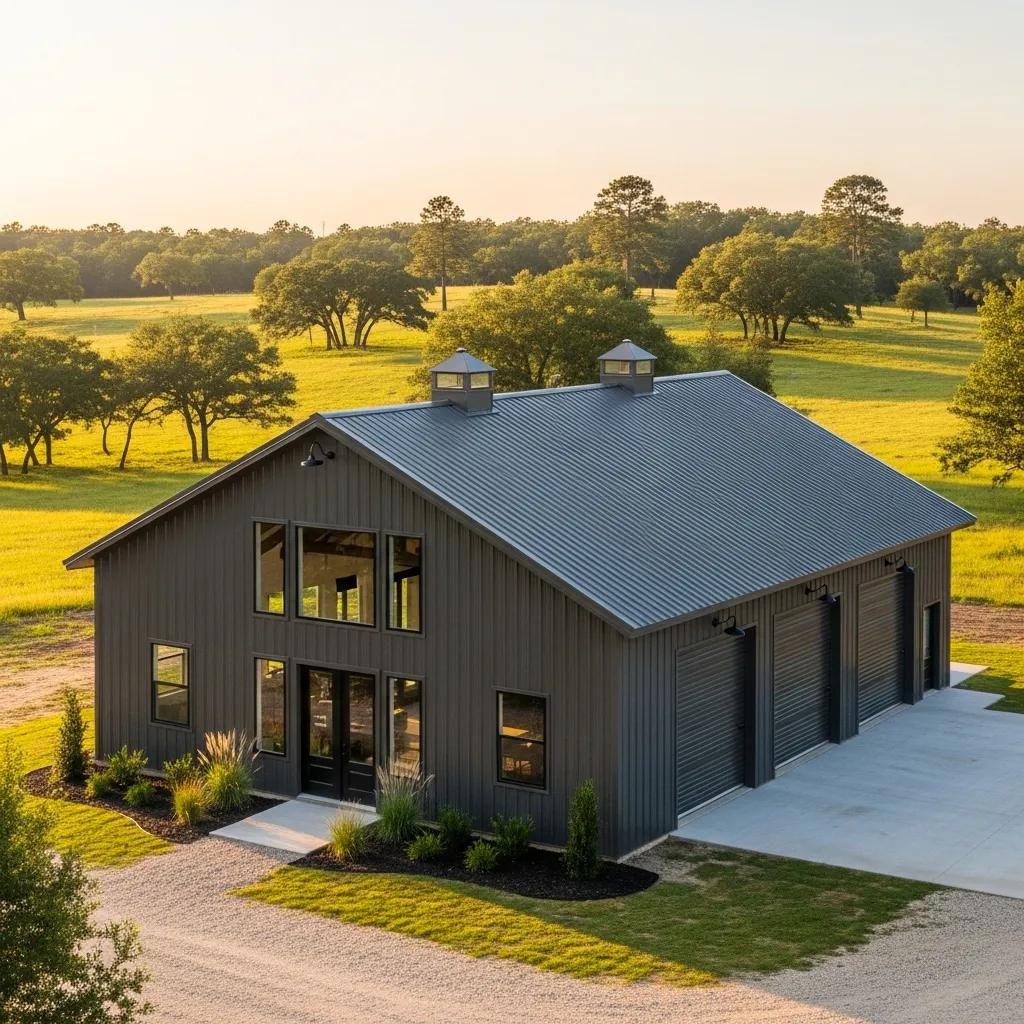
Custom Barndominium Builder in Jasper, Texas: Your Guide to Durable, Affordable Metal Homes
Barndominiums blend a structural steel or post-frame shell with traditional living spaces and optional workshop bays to create durable, low‑maintenance homes that work well in Jasper, Texas. This guide walks through what a barndominium is, why metal construction suits East Texas, realistic cost ranges, practical floor plans, financing options, local site considerations for lake and rural lots, and the builder’s path from concept to move‑in. Many owners want affordable, weather‑resistant homes that fit rural parcels and lake views; barndominiums deliver through efficient construction, open layouts, and flexible shop integration. Read on for clear definitions, checklists, comparison tables, and financing Q&A to help you evaluate a custom barndominium in Jasper and nearby East Texas and West Louisiana communities.
What Are Custom Barndominiums and Why Choose Them in Jasper, Texas?
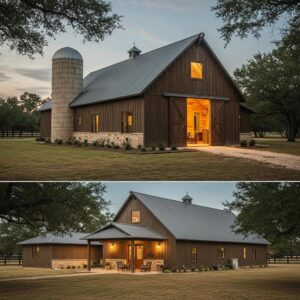
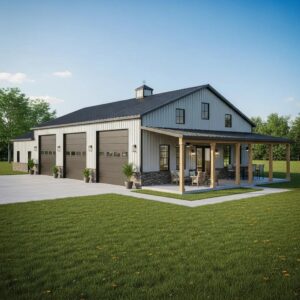
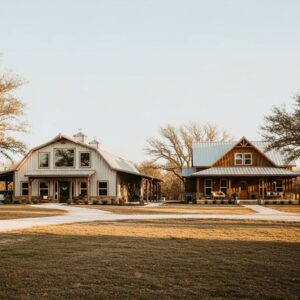
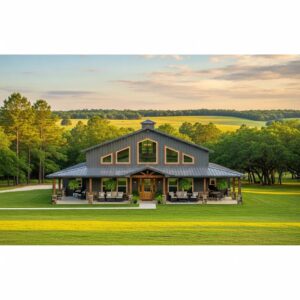
A barndominium is a metal or post‑frame home where the main shell serves both as living space and as a utility or shop area. That simplicity—whether built with a steel frame or post‑frame construction—creates wide, column‑free interiors so you can lay out open living areas and workshop bays without costly interior load‑bearing walls. In Jasper and across East Texas, metal shells resist rot and termite damage, reduce routine maintenance, and often shorten build time compared with traditional stick‑built homes. That combination makes them a practical, durable choice for the coastal‑plain climate and rural life here.
Most barndominiums include a handful of structural and finish elements that steer cost, performance, and use.
- Steel frame barndominium: Prefabricated steel members for fast erection and maximum clear span.
- Post‑frame barndominium: Heavy timber posts set into the foundation for an economical shell on many rural sites.
- Barndominium with shop: One or more drive‑through bays for equipment, hobbies, or storage.
To make the idea concrete, one common definition emphasizes the hybrid nature of these buildings.
Defining Barndominiums: Post‑Frame Hybrid Homes
Often called a “barndo” or “shouse” (shop + house), a barndominium is a post‑frame building that combines living quarters with a large garage, workshop, hangar, or recreational space.
Those archetypes map directly to homeowner priorities—whether you want long clear‑span shops, lower material costs, or easier on‑site adjustments. The sections that follow translate those technical features into day‑to‑day benefits.
What defines a barndominium and its key features?
A typical barndominium pairs a metal or post‑frame shell with insulated living areas and an attached shop bay, creating a flexible footprint that mixes comfort and utility. Common parts include metal roofing, insulated wall panels, Low‑E windows, concrete slab foundations, and integrated shop bays—each affecting energy performance and durability. Steel frames give large clear spans and resistance to termites and mold; post‑frame options can be more cost‑efficient on good rural soils. Together, these choices mean lower maintenance, adaptable interiors, and simpler routing for HVAC and electrical systems.
The clear‑span shell also makes it easy to reconfigure interiors over time, which leads into why barndominiums fit many East Texas lifestyles.
Why are barndominiums popular among East Texas families and retirees?
Families and retirees in East Texas choose barndominiums because they deliver affordable square footage, built‑in workshop space for hobbies or small business, and lower upkeep for rural properties. Retirees often prefer single‑level layouts and covered porches for lake views; families like open plans that adapt to multigenerational living or tool‑ready shops. Regional drivers include plentiful rural lots, demand for lake homes on Sam Rayburn and Toledo Bend, and the need for buildings that handle humid summers and storm exposure with durable materials. The high degree of customization means these homes can serve everything from low‑maintenance retirement living to active hobbyist spaces.
If you’re planning a build in Jasper, lot workability and local permitting will guide the best shell type and building orientation. We cover cost implications next.
How Much Does It Cost to Build a Barndominium in Jasper, Texas?
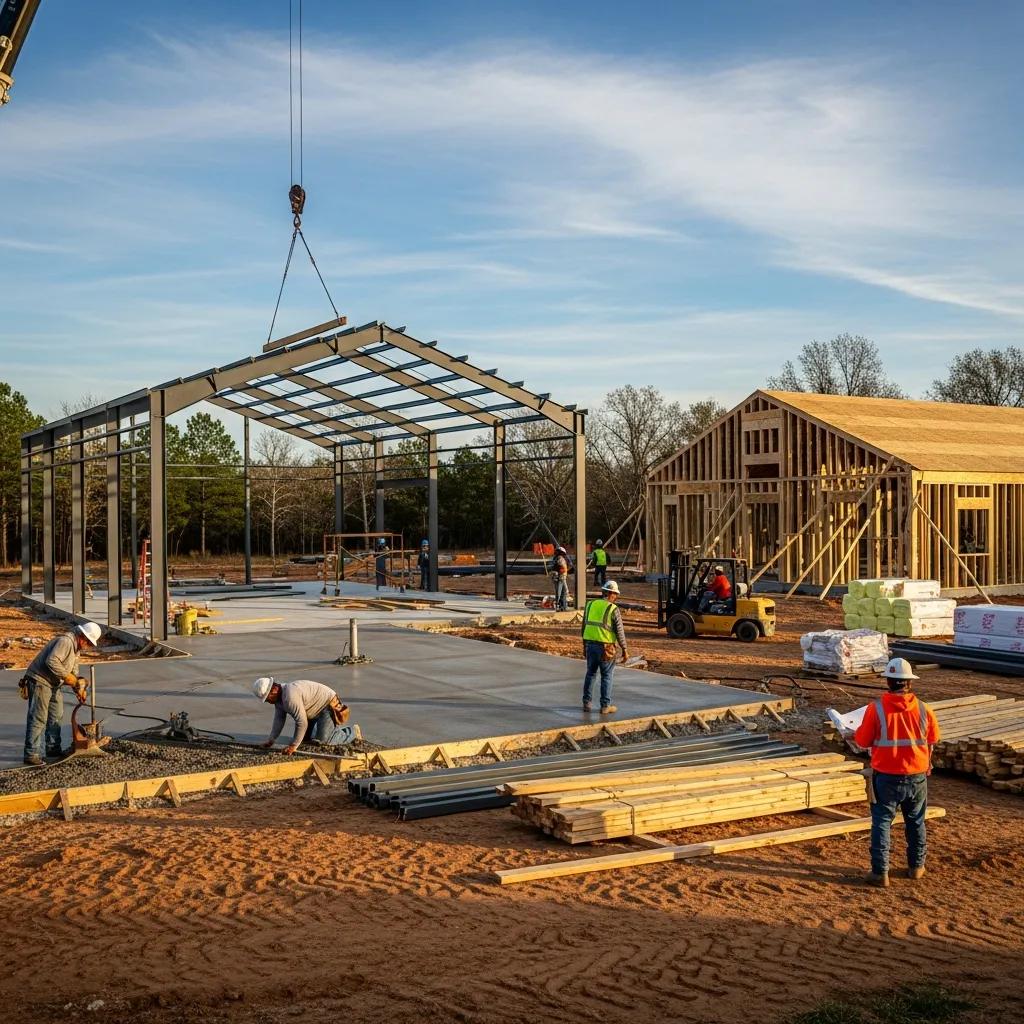
Costs split cleanly between shell‑only work and finished homes. A shell‑only build is cheaper per square foot; fully finished homes with upgraded cabinetry, insulation, and mechanicals move costs closer to traditional custom builds. Major cost drivers include site preparation, foundation choice, finish level, mechanical systems, and size. East Texas $/sqft ranges vary depending on those choices and whether you need new septic or well systems. The table below offers a compact comparison of common build types and typical per‑square‑foot ranges.
Here is a simple comparison of build types and estimated per‑square‑foot ranges to help set realistic budgets.
| Build Type | Typical Included Work | Estimated $/sqft Range |
|---|---|---|
| Shell‑only | Structural shell, metal roofing, basic insulation, exterior doors/windows | $50–$90 |
| Mid‑level finish | Shell + drywall, mid‑grade finishes, HVAC, plumbing, electrical | $95–$150 |
| Turnkey finished | High‑end finishes, landscaping, upgraded systems, site amenities | $150–$250 |
As the table shows, higher finish levels and added systems raise the per‑square‑foot price. The list below outlines the biggest budget drivers.
- Site preparation and access — remote or rough sites need more heavy equipment time and can increase costs quickly.
- Foundation choice — slab vs. pier or elevated options affect labor, materials, and suitability for wet soils.
- Finish selections — flooring, cabinetry, and fixtures move a project from economical to premium pricing.
At Ross Homes and Drafting, LLC we use itemized, transparent estimates so buyers see exactly how choices affect cost. We encourage prospective owners to request a line‑item estimate to compare options clearly.
What factors influence barndominium costs in East Texas?
Final price depends on plan size and complexity, finish level, mechanical and insulation standards, and site access. Large clear‑span shop areas increase structural cost but can improve value when you spread that cost over usable square footage. Mechanical decisions—oversized HVAC for open volumes, higher R‑value insulation, and Low‑E windows—raise upfront costs but lower operating bills in humid East Texas. Knowing these trade‑offs helps you prioritize comfort, resale, and long‑term maintenance.
Those drivers point directly to site issues like soil, drainage, and foundation choice, which we cover next.
How does site preparation and foundation affect your budget?
Site work and foundation often account for 10–20% of the budget because of grading, clearing, drainage, and any soil remediation needed. On East Texas and lakefront lots, drainage and erosion control are crucial—poor drainage can require deeper footings, retaining walls, or costly fill. Common foundations include slab‑on‑grade for stable sites and pier foundations when elevation or soil conditions demand it. Use this quick site‑assessment checklist to estimate likely costs: access route, tree clearing, soil borings, drainage plan, and utility routing.
Getting a site assessment early reduces surprises and helps lenders and builders create accurate permit‑ready scopes and bids.
What Are the Best Barndominium Floor Plans and Designs for East Texas?
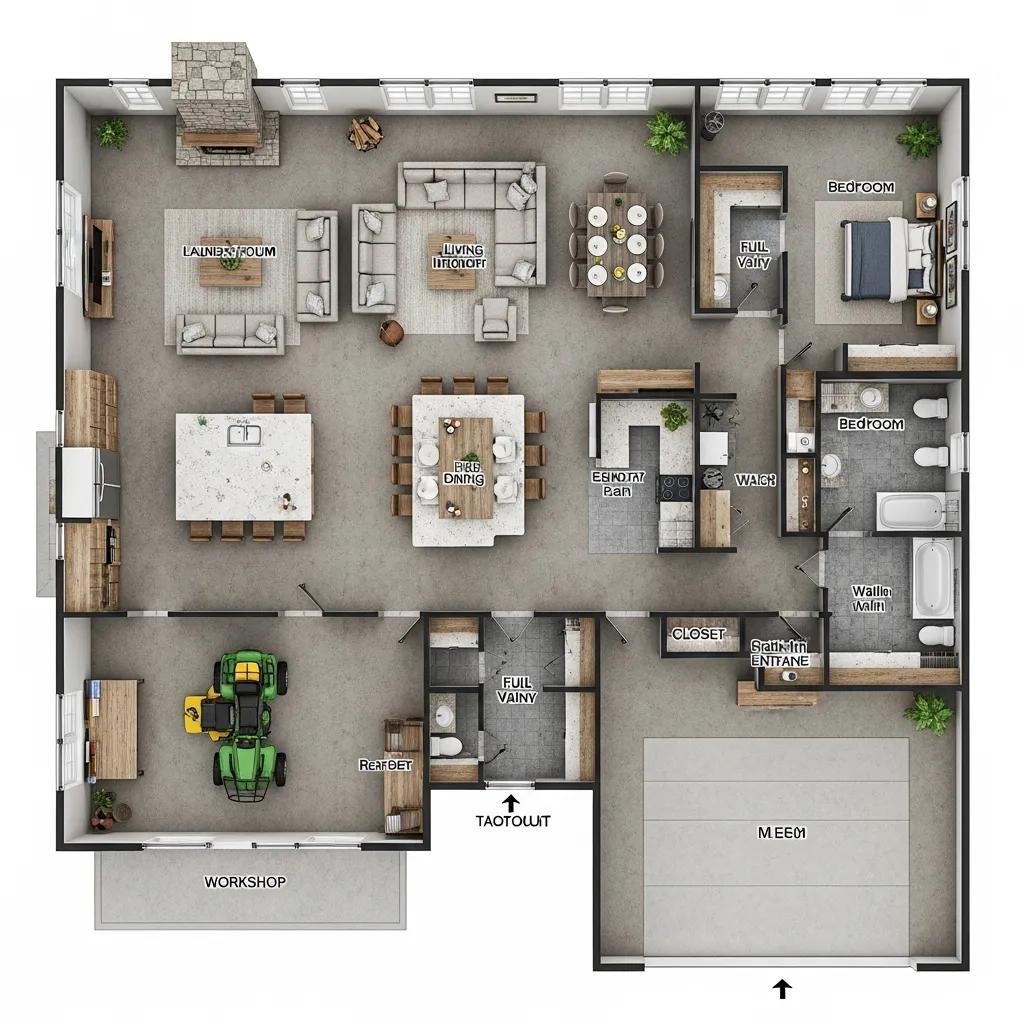
Picking a floor plan for East Texas means balancing open living, climate strategies (shade and cross‑ventilation), and shop placement for rural lifestyles and lake views. Orient living areas to catch breezes and shield large windows with porches or deep eaves to cut cooling loads. Shop‑first plans put workspaces to one side with sound buffers; lake plans prioritize porches and view‑oriented glazing. The table below pairs plan types with homeowner goals and key features to consider.
| Floor Plan Type | Best For | Key Features |
|---|---|---|
| Open‑concept living | Families, entertaining | Large central living/kitchen, vaulted ceilings, flow to porch |
| Shop‑first plan | Hobbyists, small‑business owners | 2–3 bay shop with separate entrance, tool storage, noise buffer |
| Lakefront layout | Retirees, seasonal homes | Large screened porch, elevated floor plates, view‑focused windows |
When you refine a plan, 3D drafting and visualization reduce expensive changes later—more on that below.
Two short lists describe the practical benefits of drafting and layout planning.
How 3D drafting enhances design:
- Clear visualization — see scale, daylight, and flow before construction.
- Fewer revisions — catch clashes early and reduce change orders.
- Permitting and lender support — professional visuals speed approvals and underwriting.
Designing shop‑to‑living adjacency:
- Acoustic separation — place bedrooms opposite noisy shops with insulated partitions.
- Circulation — add service entries and mudrooms between shop and living areas.
- Storage — plan oversized closets and overhead storage for seasonal and lake gear.
These tactics improve daily livability and simplify construction; next we explain how our in‑house drafting supports those outcomes.
How do 3D drafting plans enhance custom barndominium design?
Our in‑house 3D drafting turns sketches into accurate models that show spatial relationships, materials, and mechanical routing so clients and trades have the same picture. The workflow is simple: we model the concept, you review a walkthrough, we refine the plan, and then produce permit‑ready documents. That reduces late‑stage regrets and speeds approvals. Lenders also respond better to comprehensive, 3D‑backed plan sets—fewer questions, faster underwriting. In practice, committing to finishes and layouts earlier saves time and money during construction.
Clear models also make budgeting more realistic and help choose key components like window types, roof profiles, and interior finishes that affect cost and performance.
What open‑concept and shop space layouts suit rural properties?
L‑shaped plans are common: one leg for the shop and the other for living. That keeps the shop close but separated for noise and fumes. Typical shop bays start around 24’–30′ deep per bay for vehicle access; hobby shops can be deeper to hold lifts or benches. Manage noise and fumes by placing mudrooms, laundry, or utility spaces as buffers and use enhanced acoustic insulation. Put storage and utilities near shop entries so tools and outdoor gear are accessible without tracking through living areas.
These layouts fit rural life well and naturally lead into financing questions many buyers have next.
How Can You Finance Your Custom Barndominium Build in Jasper, Texas?
Barndominium financing follows the same basics as other custom builds but lenders expect clear plans, itemized budgets, and proof of site access. Construction‑to‑permanent loans and portfolio lenders are common for these projects. A construction‑to‑perm loan combines short‑term construction credit with a permanent mortgage after completion, which reduces duplicate closing costs. Below are typical financing routes and a short Q&A on how construction‑to‑perm works.
Common financing options in East Texas include:
- Construction‑to‑perm loans — a single‑close loan that converts to permanent financing when the project is done.
- Portfolio lenders — local banks that hold loans and are more flexible with nonstandard properties.
- Private lenders — alternative financing for unconventional collateral or faster timelines.
What lenders expect to see:
- Detailed plans and 3D renders that clarify scope and value.
- Itemized cost estimates with clear line items.
- Site reports and permits to confirm constructability and reduce lender risk.
Ross Homes and Drafting, LLC regularly prepares permit‑ready plans and 3D renders to help borrowers present lender‑ready packages and speed underwriting.
What financing options are available for barndominiums in East Texas?
You can pursue a construction‑to‑perm loan for a single‑close experience, work with portfolio lenders for flexibility on unconventional collateral, or consider private financing when traditional banks won’t underwrite. Each path has trade‑offs: construction‑to‑perm reduces repeated closings but needs lender comfort with your plans, portfolio lenders often value strong local relationships, and private lenders offer flexibility at higher rates. Down payment expectations and documentation needs vary, so lining up the right lender early prevents delays.
Setting up financing early also establishes draw schedules and inspection plans you’ll need during construction.
How do construction‑to‑perm loans work for barndominium projects?
Construction‑to‑perm loans move from application to underwriting (with plan and cost review), then through a construction phase that pays the builder in draws tied to inspections, and finally convert to a permanent mortgage after certificate of occupancy or project completion. Typical draw stages include site, foundation, shell, interior, and final—each released after inspection. Lenders require permit sets, detailed estimates, builder agreements, and proof of insurance. Clear 3D plans and transparent estimates reduce lender questions and help keep draws flowing on schedule.
Well‑documented draw schedules and coordinated inspections also lower the risk of disputes and change‑order delays during the build.
Where Does Ross Homes and Drafting Build Barndominiums in East Texas and West Louisiana?
Ross Homes and Drafting, LLC builds across East Texas and into West Louisiana, specializing in lake homes on Sam Rayburn and Toledo Bend. We’re a third‑generation, family‑run builder that handles planning, design, and construction of custom homes and barndominiums. Our regional focus covers rural counties and waterfront properties where site‑smart detailing and coordinated trades matter most.
Building in these areas requires careful attention to wind loads, moisture control, and view orientation. An end‑to‑end builder simplifies logistics for remote sites by coordinating local trades and permits. If you’re planning a remote or lakeside build, factor travel logistics and a site visit into your timeline; a site‑specific consultation confirms feasibility and narrows options.
What makes building on Lake Sam Rayburn and Toledo Bend unique?
Lakefront projects need view‑focused orientation, raised floor plates where flood risk exists, and finishes that stand up to moisture and wind. Porches and decks are often prioritized for outdoor living and water access. We specify moisture‑resilient finishes, properly fastened metal roofing, and careful detailing at transitions to prevent water intrusion—especially important in humid East Texas. Utility routing and access can be more complex on waterfront lots, and permitting may include shoreline setbacks and erosion control. Thoughtful site‑smart design preserves the view while keeping long‑term maintenance manageable.
Those lakefront considerations influence foundation and access planning and help define the counties we serve.
Which counties and rural areas are served by Ross Homes and Drafting?
We support builds throughout East Texas and into West Louisiana, concentrating on lakeside communities around Sam Rayburn and Toledo Bend and surrounding rural counties where homeowners want custom metal homes. We factor travel and crew logistics into estimates so clients understand mobilization for remote sites. Prospective owners should request a site visit to evaluate access, utilities, and foundation options—information that lets us produce accurate bids and realistic schedules.
Local know‑how about county permitting and trade networks reduces surprises and speeds project timelines for lake and rural properties.
How Does Ross Homes and Drafting Ensure Quality and Transparency in Barndominium Construction?
We emphasize quality control with an end‑to‑end approach: in‑house 3D drafting, clear itemized estimates, and a single accountable team that coordinates trades on remote sites. That reduces miscommunication and keeps projects moving. Our transparent pricing—presented as clear line items—removes guesswork so clients see what they’re paying for at each phase. One accountable team manages scheduling, quality checks, and punchlist completion, which matters when multiple subcontractors must be synchronized on rural jobs. The table below maps major milestones, typical timeframes, and deliverables so you know what to expect.
| Process Step | Timeframe (typical) | Deliverable |
|---|---|---|
| Consultation & Site Assessment | 1–3 weeks | Site report, high‑level budget |
| 3D Drafting & Estimate | 2–6 weeks | Permit‑ready plans, itemized estimate |
| Permitting & Preconstruction | 4–12 weeks | Permits, finalized schedule |
| Construction & Inspections | Varies by size; 4–9 months | Phased completions, inspection reports |
| Punchlist & Move‑in | 2–4 weeks | Final walkthrough, punchlist resolution |
This phased approach and clear deliverables reduce surprises and keep expectations aligned between owner and builder.
Single accountable team: One main contact handles scheduling, subcontractors, and quality control.
Itemized estimates: Line‑item pricing shows exactly what’s included at each phase.
3D visualization: Permit‑ready models reduce late design changes and help secure financing.
Those practices lower change orders and improve budgeting. The paragraph below explains how transparent pricing and 3D visualization benefit clients.
What is the process from consultation to move‑in with Ross Homes?
We begin with a site consultation and assessment, then move to in‑house 3D drafting to produce permit‑ready plans and an itemized estimate. After permitting and preconstruction, we build with phased inspections and complete a punchlist before move‑in. Deliverables at each step include site reports, 3D renderings, a clear line‑item estimate, and inspection documentation for draws and final occupancy. Timelines vary with permit cycles and project size, but clear scheduling and one accountable team help minimize delays on rural projects. Clients who engage early with detailed plans generally see smoother financing and faster starts.
This workflow reduces guesswork and aligns expectations for owners and lenders.
How does transparent pricing and 3D visualization benefit clients?
Transparent pricing and 3D visualization cut surprises and speed decisions by clarifying scope, finishes, and mechanical routing before construction starts. Itemized estimates make it easy to compare shell‑only vs. finished builds, while 3D models show real‑world scale, daylighting, and flow so owners choose finishes with confidence. These materials also shorten lender review times because underwriters get complete plan sets and cost breakdowns, and they reduce change orders by catching conflicts during design. The end result is better budgeting, fewer mid‑build disputes, and a smoother path from concept to move‑in.
If you’re ready to explore a custom barndominium, Ross Homes and Drafting, LLC offers regional experience, 3D drafting, transparent estimates, and coordinated build management for East Texas and West Louisiana projects. Request a site‑specific consultation to start and get a lender‑ready package.
Frequently Asked Questions
What are the advantages of building a barndominium compared to traditional homes?
Barndominiums deliver cost efficiency, durability, and design flexibility. Metal and post‑frame construction allow larger, open spaces without interior load‑bearing walls, which often lowers construction cost. These buildings resist pests and moisture—important in humid East Texas—and are easy to customize so you can combine living space and workshop areas to suit your lifestyle.
How long does it typically take to build a barndominium?
Timelines vary by size, complexity, and site conditions. From first consultation to move‑in, expect roughly 4 to 9 months for most projects. That window includes site assessment, permitting, and construction. Working with a builder who provides clear schedules and project management helps keep things on track.
What maintenance is required for a barndominium?
Barndominiums are generally lower maintenance because metal exteriors resist rot and pests. Routine care still matters: inspect the roof and siding, clean gutters, and watch for signs of moisture intrusion. Inside, maintain HVAC, plumbing, and other systems. Overall, maintenance is typically less demanding than for many conventional homes.
Can I customize the design of my barndominium?
Absolutely. Customization is a major benefit. You can choose floor plans, finishes, and layouts for open living, integrated workshops, or lakefront views. Working with a builder that offers in‑house 3D drafting makes customization easier because you can review detailed visualizations before construction starts.
What financing options are available for building a barndominium?
Financing options are similar to other custom builds: construction‑to‑perm loans, portfolio lenders, and private financing are common. Construction‑to‑perm simplifies the process by combining short‑term construction financing with a permanent mortgage at completion. Portfolio lenders can be flexible with unconventional properties, and private lenders offer alternate solutions when needed. Detailed plans and itemized costs speed the financing process.
Are there any zoning or permitting considerations for building a barndominium?
Yes. Zoning and permitting vary by locality, so check local rules for land use, building codes, and any special requirements for metal structures. Obtaining the right permits before construction prevents delays and compliance issues. Working with a builder familiar with local regulations helps you navigate the process smoothly.